
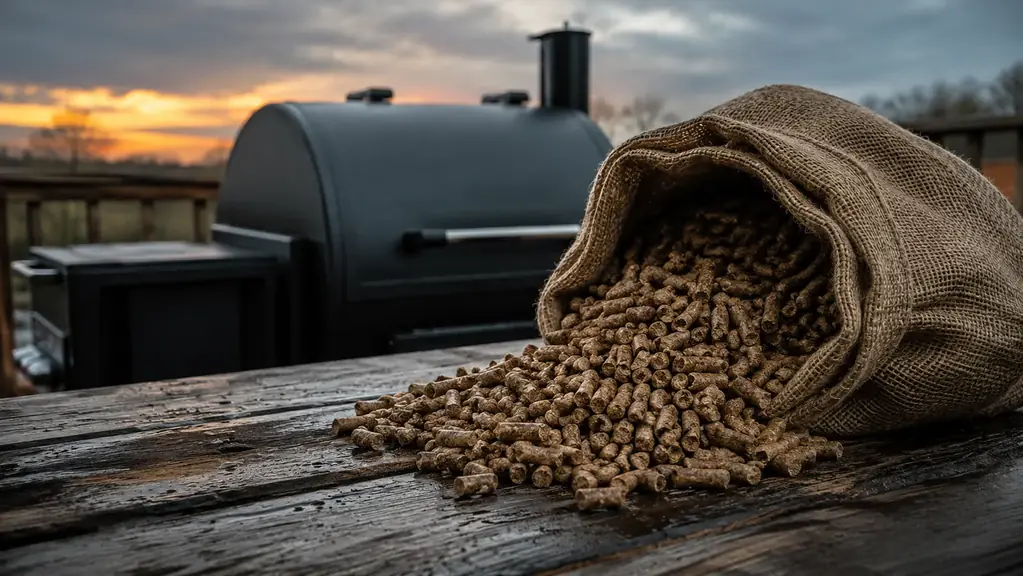
I lost the better part of a spring to the wrong pellets. Same smoker, same ribs, same rub, and the flavor came out thin and bitter one weekend, then like I'd saved it in a closet the next. I blamed the grill. It wasn't the grill. It was that I was buying bags by whatever was cheapest at the register, and I had no idea what any of them actually were. If you're here because the copy on the bag means nothing to you, I get it. We're going to fix that in five steps, and you'll never stare at a bin of pellets again wondering if you're doing this wrong.
Start With a Blend That Plays Nice With Everything
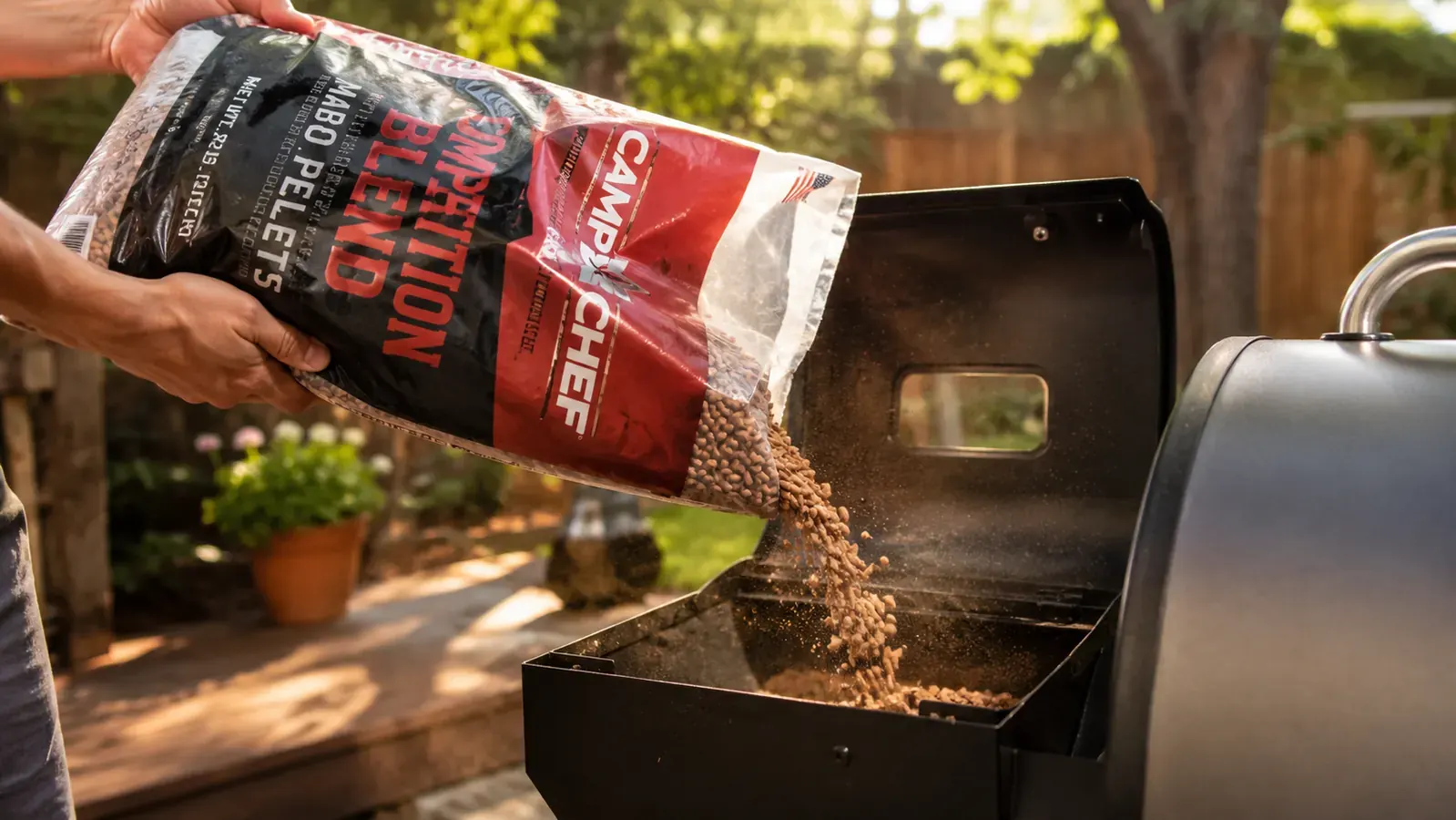
If you smoke a little of everything, you don't need to chase a specialty bag. Camp Chef Competition Blend is a hardwood mix that behaves on poultry, pork, and beef, so one bag covers a whole season without you overthinking a single cook. It's the bag I keep in the hopper for 80 percent of my cooks.
Amazon Check Today's Price on Amazon →Before we get into the steps, one thing up front that saves you most of the trouble: your smoker does not care about your taste in wood the way you think it does. A pellet grill holds temperature with a controller, and the pellets are fuel first, flavor second. Get the fuel right and the flavor follows. Get a bag full of sawdust and filler and no amount of oak on the label fixes the burn.
Step 1: Match the Wood to the Meat
Pellets break into mild and strong, and nothing about picking them is complicated if you keep that in mind. Mild woods are apple, cherry, pecan, and maple. They smoke light and sweet, and they're the right call for chicken, turkey, and pork, because those meats don't take a heavy hand. Strong woods are hickory, mesquite, and oak. They punch through beef, game, and anything you'd eat with a steak knife anyway. A rack of baby backs smoked in mesquite tastes like you fed the coal pile to a pork chop. Don't do that.
Here's the shortcut I actually use at the hardware store: if the meat is white, go mild. If the meat is red or you're doing a long brisket cook, go strong. That's not a food-writer's rule I'm dressing up for you. It's how the smoke behaves. White meat soaks up a sharp wood in the first couple hours and you get bitterness. A tough cut of beef needs the wood's backbone to carry it for eight or ten hours or you just get warmed meat with a whisper of smoke.
Here's the shortcut I actually use at the hardware store: if the meat is white, go mild. If the meat is red or you're doing a long brisket cook, go strong. That's not a food-writer's rule I'm dressing up for you. It's how the smoke behaves. White meat soaks up a sharp wood in the first couple hours and you get bitterness. A tough cut of beef needs the wood's backbone to carry it for eight or ten hours or you just get warmed meat with a whisper of smoke. And here's the part the bag never tells you: a strong wood smoked slow and low is gentler than a mild wood run hot. Heat is part of the flavor equation too, so don't blame the whole taste on the species.
Step 2: Understand Blends vs Single Woods
A single-wood bag says one thing on it and delivers roughly that, like a straight hickory or a straight apple. A blend takes two or three woods and piles them in, which does two things for you. It rounds out the flavor so no single wood stomps the meat, and it makes the burn steadier, because the different woods hit temperature a little differently and cover each other's gaps.
For everyday smoking, a blend is almost always the better buy. You get a complex flavor without having to think. The Competition Blend from Camp Chef is a real hardwood mix, not a marketing story, which is exactly what I look for in a bag I'm going to burn all season. When I want straight flavor for a specific cook, I'll grab a single wood. But those are the exceptions, and I don't keep four open bags in my shop unless I've got a reason.
Step 3: Check That It's Real Hardwood, Not Filler
Here's the thing nobody reads on the bag: what's actually in the pellet. Cheaper bags get away with cutting hardwood with filler woods, bark, or even binding oils, and the smoke suffers for it. You want a bag that states 100 percent hardwood on it, and you want to be able to look at the pellets and see clean, uniform little cylinders with a true wood color, not a bag of dust and elbows.
Watch the ash, too. A clean hardwood pellet burns slow and leaves light, fine ash. A bag heavy on filler leaves clinker, those hard little chunks that plug up your firepot and make your controller fight for temperature in the middle of a long cook. I clean my firepot after most cooks anyway, but a clean-burning pellet means I'm scraping out soft grey ash with one hand instead of digging clinkers out with a screwdriver and some words.
A Bag That Burns Clean Is a Bag You Stop Thinking About
The fastest way to know you've bought right is a pellet that lights easy, burns even, and leaves fine ash you can wipe out. Camp Chef Competition Blend is a genuine hardwood mix with a track record to match, which is why it earns the home in my hopper.
Amazon See Camp Chef Competition Blend on Amazon →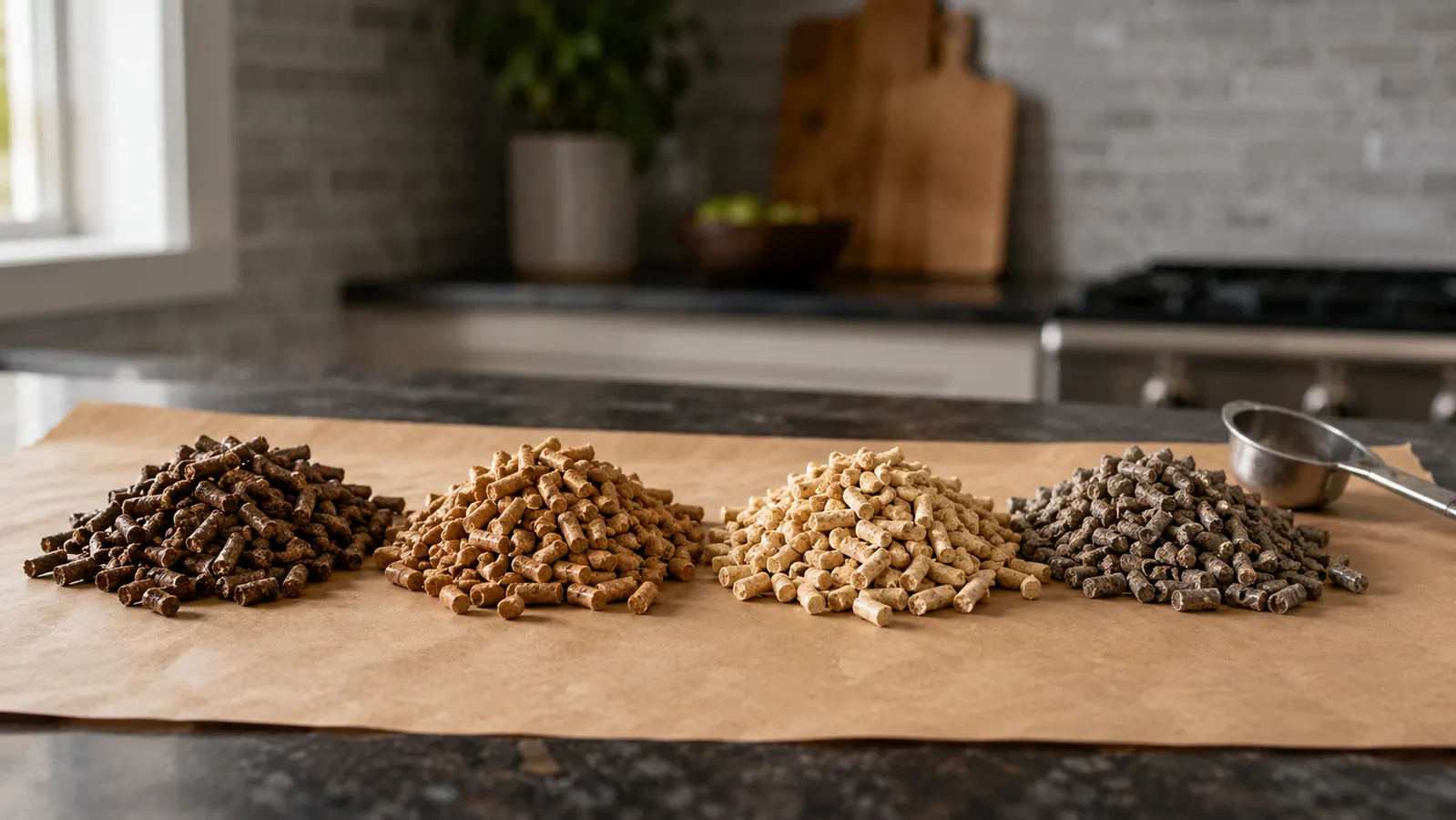
Step 4: Mind the Ash and What It Means for Your Grill
Ash is the bill you pay for choosing pellets the easy way. Every wood leaves some, and the cheap bag always leaves more. It comes down to what the pellet is made of and how dense it is. A dense, clean hardwood pellet burns hot and leaves little. A soft, barky pellet burns fast and cooler, and it piles ash into the firepot while it does it.
I run a brisket overnight at 225. That's ten to twelve hours of the auger feeding and the fire going. A clean pellet gets me through that with one quick scrape before I wrap. A cheap one means I'm out there in the cold at 3 in the morning because the temp started to sag. I've done that enough times to be done with it. Choose a pellet that burns clean and you'll spend your night sleeping, not babysitting.
You'll also notice the difference at cleanup. A good bag leaves you a dry pile of light ash you can scoop into a bucket in minutes. That's it. You're done. Camp Chef's Competition Blend has been consistent for me here, cook after cook: the hopper stays happy and the firepot wipes clean, so the grill stays where you left it and the next cook starts fresh. The pellets that leave clinker mean a deeper dig and a shop vac before the firepot is truly clean. Nobody needs that habit.
Step 5: Buy for Your Cook Volume, Not the Sale
Last step, and it's the one that keeps your money on your side of the table. A 20 pound bag is the standard retail size, and it's right for the guy who smokes a couple weekends a month. If you're like me and the smoker runs most Saturdays in the summer, you burn through a 20 pound bag noticeably faster, so you want to think in cost per pound and keep a couple bags on hand rather than chase a 10 pound novelty bag at the register.
The trap is buying any bag just because it's on sale. A pellet that burns fast and turns to clinker is not a deal at any price, because you'll use more of it and you'll pay for it in lost sleep and bad flavor. A clean 20 pound hardwood bag at a fair price beats a mystery bag marked down every single time. That's not hype, that's arithmetic, and my summer cook schedule has settled it for good. Do the rough math before you buy: a clean bag tightens your temperature, which shortens a stalled cook, which means you use fewer pellets per meal. The cheap bag is only cheaper on the shelf, never in the hopper.
What Else Helps
Pellets want to stay dry, full stop. Keep the bag sealed and off the concrete floor, because damp pellets swell, crumble, and jam the auger, and then your whole cook is sideways for reasons the meat never deserved. I keep my bags in a sealed bin in the shop and I bring out what I need for the day. Store it dry and your pellets will act right for months.
Second thing: don't mix stale bags from last season with fresh ones and expect consistency. Pellet flavor and burn change as they age, and a hopper half full of old hardwood and half of new gives you a cook that wanders. Finish a bag before you crack the next one. It's a small discipline and it pays off in a cook that holds a straight line.
Match the wood to the meat, keep the bag dry, and let a clean hardwood pellet do its job. The flavor follows on its own.
And if you're just getting your feet under you, skip the four-bag approach entirely. Pick one clean hardwood blend with a mild-to-medium character, learn it across a few cooks, and only branch out once you know what you like. Most of the pellet confusion I see comes from people owning eight flavors before they've learned to trust one. Show me a guy who can nail a consistent cook with one solid bag and I'll show you a guy who can handle any of them.
My Everyday Answer
After a season of testing bags end to end, Camp Chef Competition Blend is the one I reach for first. It's a genuine hardwood mix, it burns clean with fine, light ash, it holds temperature through a long brisket cook, and it plays nice across pork, poultry, and beef. It's not the cheapest bag in the store and it's not meant to be. It's the one that stops me from thinking about pellets and lets me think about the meat, which is the whole point of any of this gear.
So here's the plain version of everything above. Match the wood to the meat, lean on a forgiving blend, watch for real hardwood and clean ash, keep the bag dry, and buy by the cook volume you actually run. Do those five things and you'll pick a good bag every time, not because I said so, but because the smoke will prove it to you on the first plate.
Grab the Blend That Ends the Pellet Guessing
One clean hardwood bag, ready for everything you smoke. Camp Chef Competition Blend is my everyday pick because it burns even and lets the meat do the talking. Check today's price and see what a straight hardwood mix does for your next weekend cook.
Amazon Check Today's Price on Amazon →