
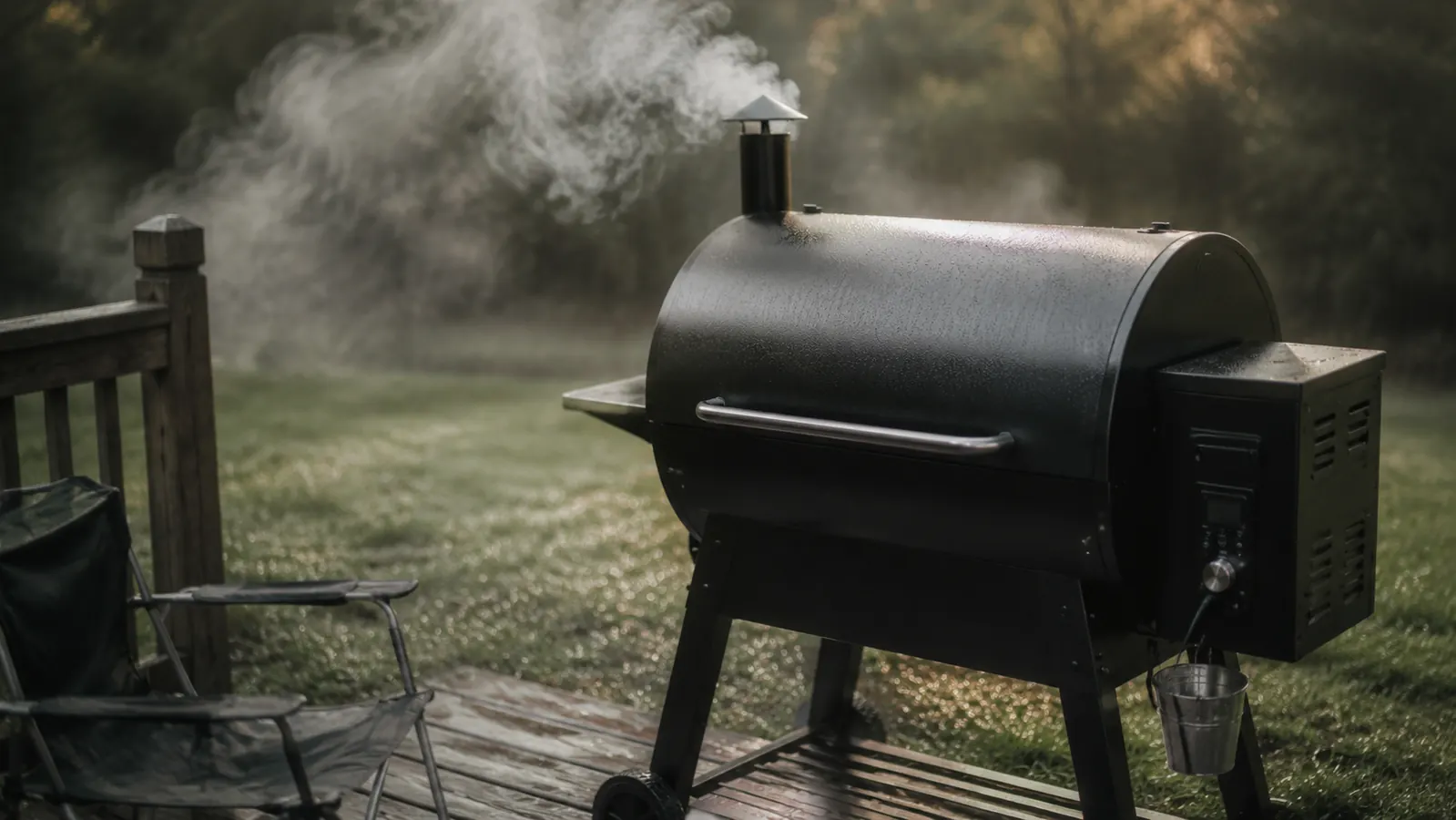
For the better part of fifteen years I babied an offset smoker. I loved the thing, but I also spent half of every cook babysitting a firebox the way a nervous parent watches a teething baby. Feed the splits, chase the vents, curse the wind. It made good meat, but it made a poor use of a Saturday afternoon I would rather spend on the lake or in the garage. So last winter I finally caved and went pellet. The Traeger Pro 22 is what I ran nearly every weekend from December into July, and I want to tell you what eight months of real use actually looks like, not what the ad photos suggest.
I have smoked brisket and pork shoulder with this Traeger for eight months now. It has been through a wet Kentucky winter, a stretch of 90 degree afternoons, and one particularly humid July that I thought would wreck everything. It has cooked while I was on the boat, while I was on a run, and while I was asleep. Here is the honest rundown.
The Quick Verdict
The Traeger Pro 22 is the pellet grill I would hand to a first-time smoker or a tired offset owner who wants the same smoke with a fraction of the babysitting. It is not a competition rig and the smoke is lighter than a stick burner, but for a consistent, set-and-forget overnight cook, it is hard to beat at this size.
Amazon Check Today's Price →The pellet grill that turned my smoke days from babysitting into fishing
I set the temp, tossed in a handful of pellets, and went to the lake while the Pro 22 did the work. If that sounds like your kind of weekend, check today's price on Amazon before you build another afternoon around a firebox.
Amazon Check Today's Price on Amazon →How I've Used It
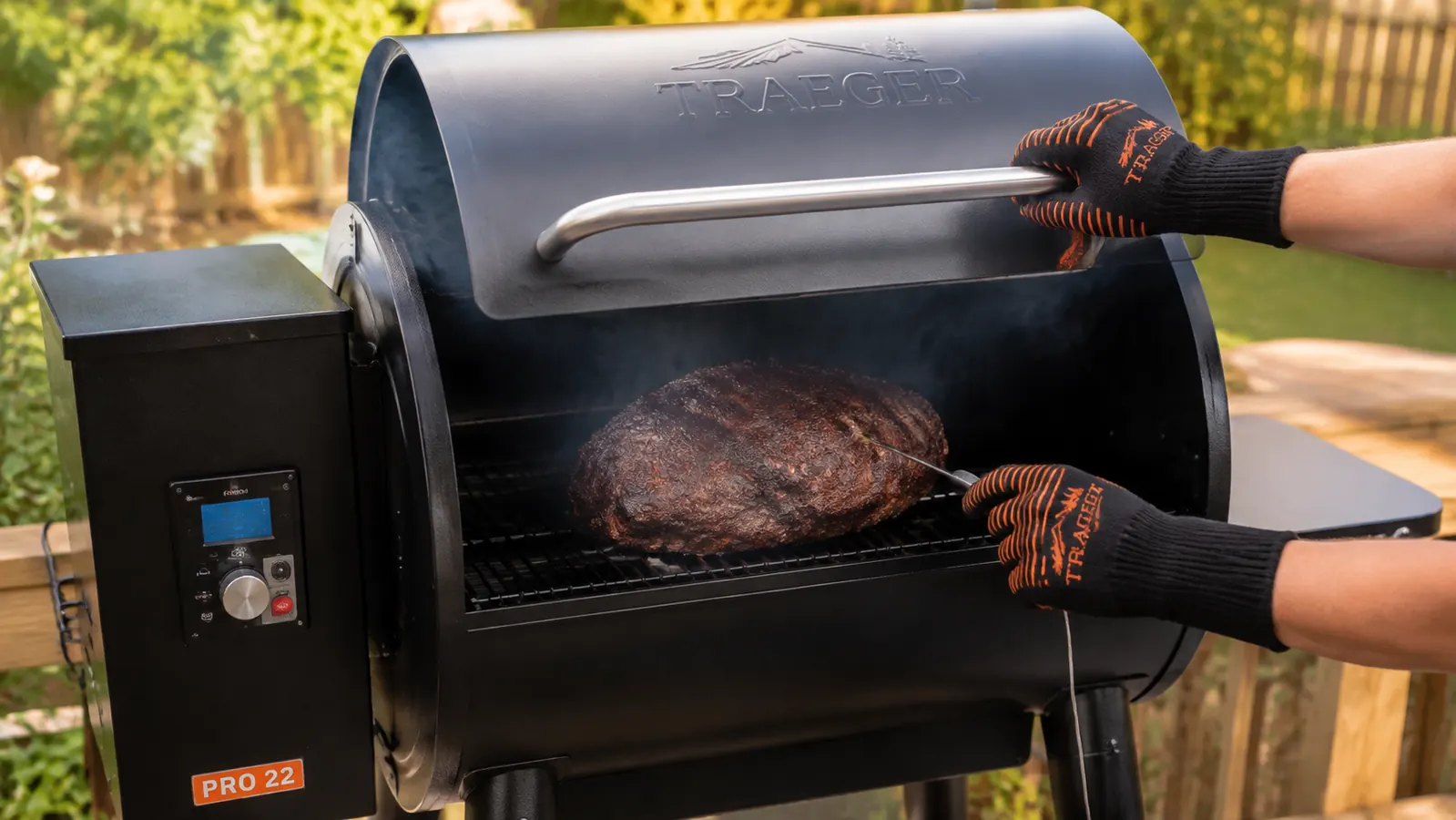
My baseline cook is a flat brisket around 12 pounds, and I have done eight of those on this Traeger since January. My routine is not clever. I trim in the afternoon, season with a 50-50 salt and pepper grind the way I always have, and set the Pro 22 to 225 the night before. I dropped a full 18 pound hopper of oak and hickory blend pellets in before bed, and when I checked at 6am the grill was holding 225, give or take a couple degrees, with maybe a third of the hopper gone.
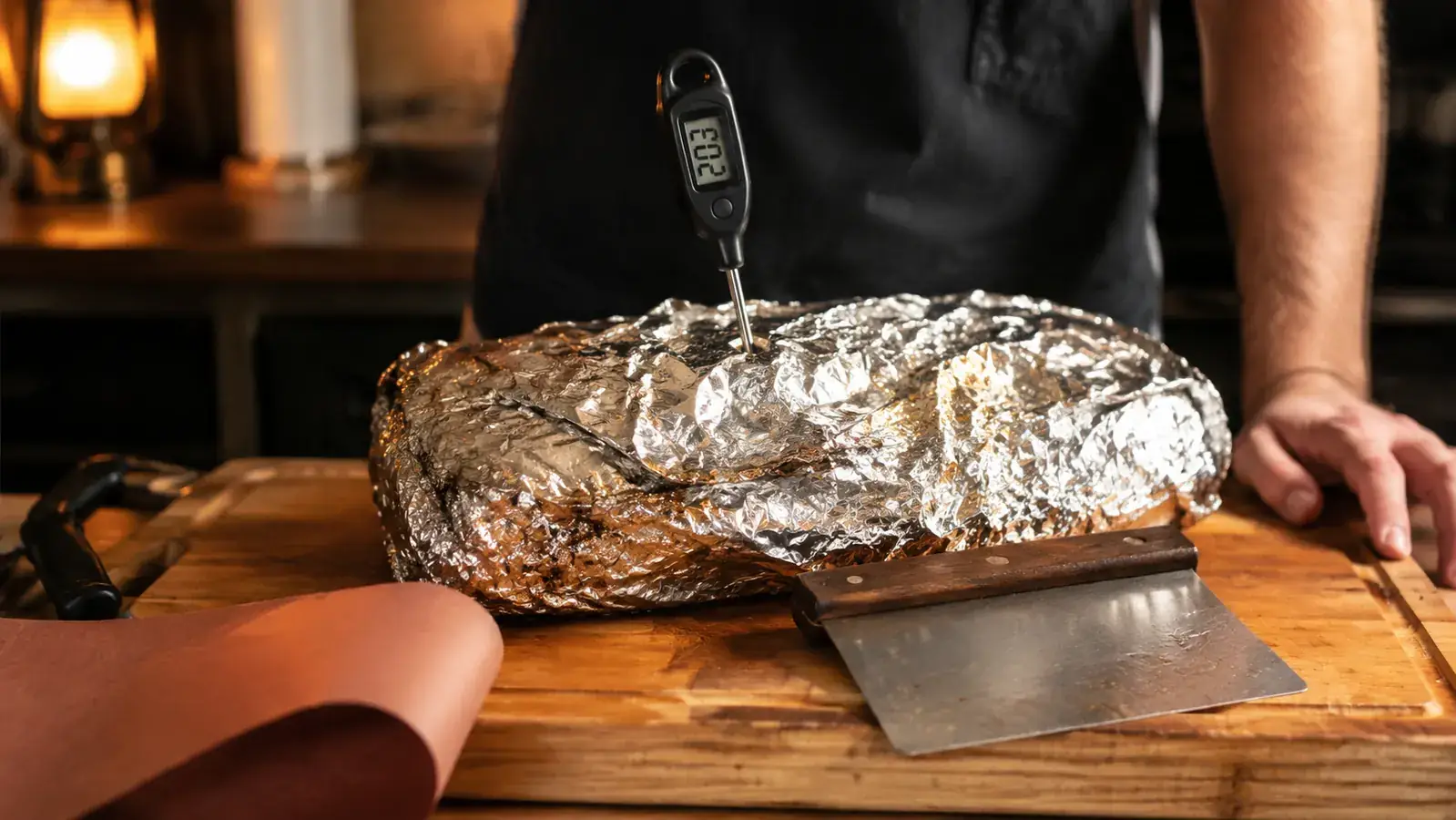
The meat probe has been my tell. The Pro 22 ships with its own probe and WiFi, so I watch the cook curve from my phone while I run the morning loop. When the flat reads 203, I wrap it in butcher paper and rest it in a cooler for two hours. Eight for eight, that routine has landed me a flat I can slice instead of shred, and I have done it without standing over smoke once. That is the whole pitch, and it works.
I have also done a full turkey at 275 for Thanksgiving week practice, a rack of ribs at 250 with a spritz every hour, and a pork shoulder that went 14 hours overnight and finished pulling at my wife's breakfast schedule instead of my own. The 572 square inches of grate swallowed a 12 pound brisket, a foil pan of beans, and a lead of sausage without complaint. Load it, walk away, come back.
I tracked pellet burn on a normal 225 overnight and a hot 275 Thanksgiving bird to see what the hopper really costs you. At 225 with a good hardwood blend, the Pro 22 sips through maybe a pound and a half an hour, which put a barely visible dent in an 18 pound hopper over sixteen hours. Crank it to 275 for a turkey and the draw climbs to roughly two pounds an hour. Reverse-sear a steak at 400 plus and it drinks closer to two and a half pounds an hour, which is why I top off the hopper before any cook that starts hot and ends low. In eight months I have never had an overnighter fall short of pellets, and I have also never once trusted that gauge by itself.
The Setup That Actually Mattered
Unboxing and first light took me under an hour, and I am someone who reads the manual out of spite. The legs bolt on with a handful of screws, the hopper and lid drop into place, and the auger tube sits plugged in ready to feed. Traeger includes a grease tray under the firepot that slides out, and the drip pan diverts most of the mess into the bucket on the side. On my offset, grease was a recurring argument with my grill cover; on this Traeger, the bucket handles a full brisket's worth of drippings without me touching it.
The WiFi pairing took three tries the first afternoon and I near sent it back on principle. That is worth flagging, because it is the single weakest minute of the whole ownership experience. The fix was boring: update the app, forget the grill in Bluetooth, and re-pair within ten feet. Since then it has reconnected every single time I open the app, through a brick wall in the kitchen, which is more than I can say for any of the cheap digital probes I wore out over the years.
Once it is lit, the Pro 22 holds a set point with a steadiness I was not expecting from a grill at this price level. On a 14 hour overnight I watched the app graph trace a near-flat line at 250, drifting maybe six degrees across the whole night. That consistency is the entire reason a beginner can turn out passable brisket on their second try rather than their tenth. The feedback loop shortens dramatically when the machine holds its temp instead of making you chase it.
Pellet Appetite and the 18-Pound Hopper
People ask me how much of a bag this thing goes through, so I measured it over a few months instead of guessing. A 20 pound bag of oak and hickory blend gave me about three overnight brisket cooks, which worked out to under seven pounds of pellets a cook at a steady 225. The same bag disappeared faster when I ran the grill hot, but for the weekend cook who mostly goes low and slow, the hopper and a single bag will carry you through the better part of a month. That settled the worry I had going in that a pellet grill would be a hungry beast.
The hopper lid seals well enough that I have left pellets in it through two weeks of Kentucky humidity without a single clump jamming the auger. I still empty it if I know the grill is sitting for more than a month, because damp pellets swell and the auger does not enjoy them. When the hopper does run low, the grill beeps and the app pushes a notice to my phone, which has saved me twice on a long cook I had stepped away from. It is a quiet thing, but waking up to a finished brisket instead of a cold grill is exactly the kind of detail that earns a machine a permanent spot on the patio.
About the Smoke Flavor
Here is the trade I need to be straight with you about, because it is the one thing the reviews do not tell you plainly. A pellet grill does not smoke like a stick burner. The pellet auger feeds a steady, even burn, which means the smoke is clean and subtle rather than the rolling, aggressive cloud you get off hickory splits. If you grew up on an offset, the first brisket off this Traeger will taste like good barbecue with a whisper of smoke, not a smoke bomb.
For me that is not a dealbreaker, it is a feature. My wife and kids cannot handle heavy smoke, and my neighbors stopped complaining. But if the only thing you want from a smoker is maximum smoke flavor and you will not accept less, a pellet grill is the wrong tool and you should keep your offset. I say this because I have read a dozen gushing pellet reviews, and every single one of them dances around this point. I would rather you know it before the box arrives.
A neighbor leaned over the fence after the second brisket and asked what I had changed, because it smelled like a barbecue joint without any of the choking. That is the pellet trade in one sentence. The smoke is there, it is just polite about it. My wife, who hated the campfire smell worked into her clothes after every offset cook, finally stopped washing my shirts separately. If you cook for people who are sensitive to heavy smoke, that quiet smoke profile is a selling point rather than a compromise you settle for. The smoke output also stays steady whatever decent brand I feed it, as long as the pellets are dry. Oak-heavy blends and sweeter hickory blends all turned into the same clean, even draw with no wild swings in the app graph. The grill does not care about the marketing on the bag; it just burns what you give it and holds the line.
I set the Pro 22 to 225 before bed, dropped in a full hopper of pellets, and by 6am I had a steady 8 degree window and a flat brisket that sliced instead of shredded. Eight for eight.
Cleanup and Daily Friction
The daily cleanup is the part that quietly decides whether a grill earns a place in the rotation. After a brisket, I scrape the drip pan with a bench scraper while it is still warm and drop the grate pieces in the sink. The grease bucket gets emptied when it is about two thirds full, which is roughly every two long cooks. Total after-cook time is ten minutes, and none of it involves a shovel or a firepit of ash.
The humid July stretch taught me the one cleanup habit worth building. When the air is thick, pellet ash gets clumpy and sticks to the inside of the firepot, so I shop-vac the pot a little more often than the manual suggests. Fifteen minutes with a vacuum, a bench scraper, and a damp rag keeps the inside presentable, and I have not had a single grease fire or smoky start since I started that routine. Compare that to the spring scrape-down my offset needed every few cooks and the difference is obvious.
The deeper cleaning comes every five or six cooks when the ash from the firepot accumulates. The Pro 22 has a removable pot that lifts out for a quick shop-vac pass, and there is a cleanout rod you can run up the auger tube if a pellet compresses. I vacuum the pot and the drop box after a heavy stretch and it stays happy. On my offset, deep cleaning was an all-morning project I put off until the cook suffered for it. On this Traeger, it takes twenty minutes and I actually do it.
Speed and Grilling Trait
It is a smoker first, and a grill second, and I want to be honest about that too. The Pro 22 cranks to 450, which is enough to sear a couple of steaks or char some chicken, but it is not the screaming heat you get off a dedicated gas grill or a chimney full of lump. I do most of my Saturday cooking on the smoker now, but if I want a hard crust on a steak I still light the charcoal off to the side. This is not a knock on the grill, it is just knowing what each tool is for.
The 572 square inch capacity is the right size for a family and the neighbors. I have fit a full brisket, a rack of ribs, and a batch of baked beans at the same time. A serious competition cook who needs to fill four shelves at once will want the bigger 34-inch body, but for backyard volume this 22-inch footprint hits the sweet spot without eating half the patio.
What I Liked
- Rock-steady temperature control that turns overnight cooks into set-and-forget
- Meat probe and WiFi let me track the cook curve from the boat or the middle of a run
- Ten minute daily cleanup and a grease bucket instead of a shovel and an ash firepit
- 572 square inches of grate swallows a brisket plus sides for a family
- Pairing the WiFi once is the whole learning curve, after which it just works
Where It Falls Short
- WiFi pairing took three tries the first afternoon, the weakest minute of ownership
- Smoke flavor is lighter and cleaner than a stick burner, so offset loyalists will notice
- This is a smoker first; a hard steak sear still wants a hot grill beside it
- Eats pellets on reverse-sear cooks at 400 plus, so budget the hopper accordingly
Who This Is For
This Traeger is for the weekend cook who has a life outside the smoke plume. If you want to feed ten people a brisket that slices, sleep through the night, and still get your morning run in, the Pro 22 is built exactly for you. It is also the right first smoker for someone who has watched offset videos, gotten intimidated by the fire management, and wants a machine that removes the fear without removing the smoke. Traeger's setup guide walks you through the first fire once, and after that you are left alone to work at your own pace, which is how every tool should treat you.
Who Should Skip It
Skip it if your whole reason for smoking is maximum, aggressive smoke flavor and you will not compromise. A pellet grill cannot put out the rolling cloud of a stick burner, full stop. Skip it if you need a true high-heat grilling machine, because 450 is a sear helper, not a grilling beast. And if you already own a competent offset and genuinely enjoy the fire-tending ritual, this Traeger is an expensive answer to a question you are not asking. For everyone else, it is a serious, honest upgrade that made my weekend smoke days about the food again instead of the fire.
Eight months, eight slicing briskets, and only one frustrating hour of WiFi setup
I was burned by cheap grills before this one. The Traeger Pro 22 earned the space on my patio, and I would buy it again today. See the current price and what the full spec sheet includes on Amazon.
Amazon Check Today's Price on Amazon →