
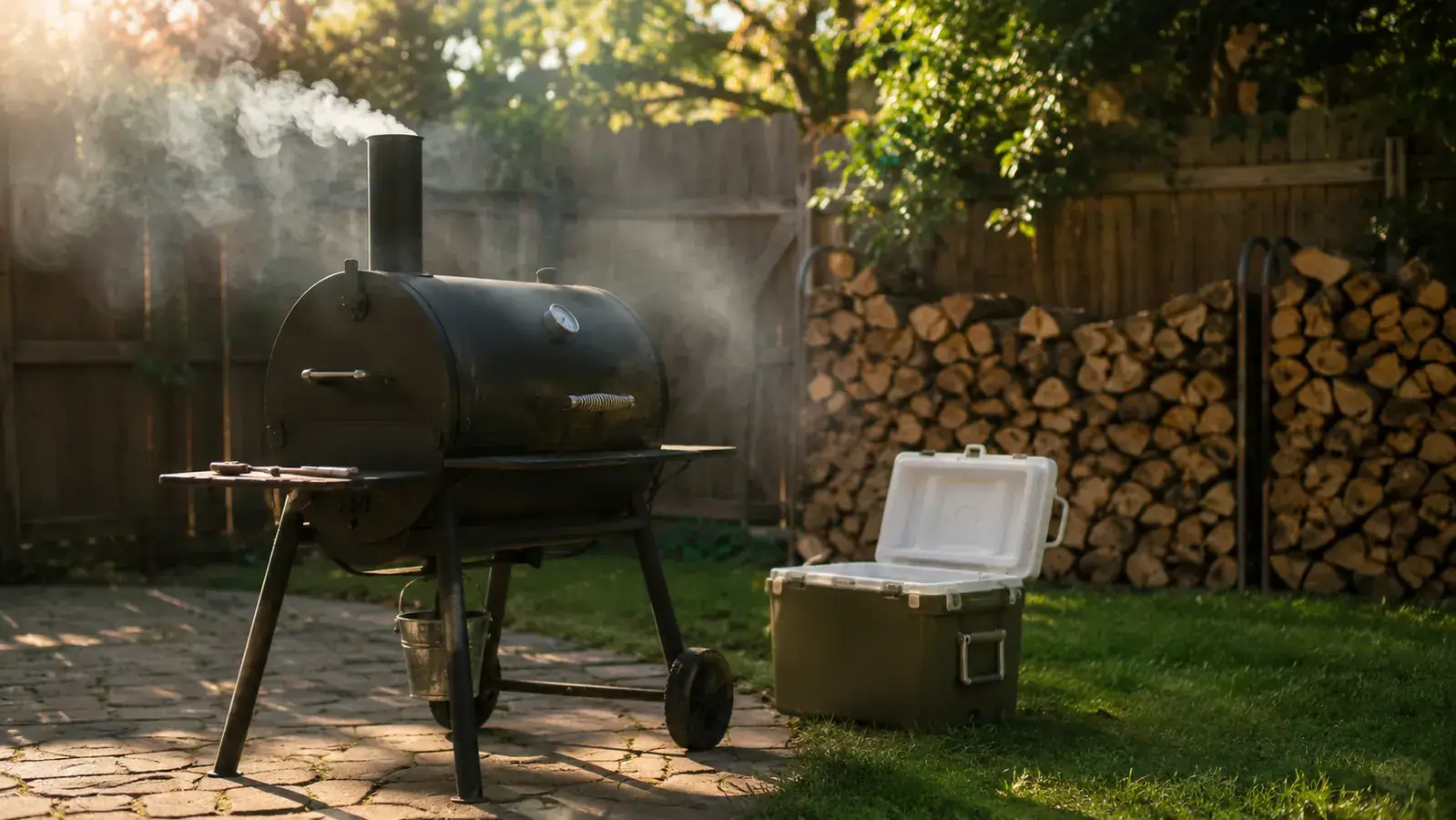
Four months ago I got tired of guessing. I had chased pellet smoke flavor through half a dozen bags of whatever was on sale at the hardware store, and the results came out all over the map. Some bags threw a heavy, dirty smoke that left a black note on the meat. Others burned thin and left every cook looking like a hot-air bake with a shrug of flavor. So I stopped buying on impulse and bought a case of Camp Chef Competition Blend pellets with the specific plan of dragging them through a full season of cooks to see what one pellet actually does over time. This is what a real stretch of use looks like, not a first-smoke impression.
I have run these Camp Chef pellets through brisket, pork butt, spare ribs, a couple of chickens, and some cheese in the off-season. Twelve cooks, spread across a stretch of humid mornings and one 90 degree stretch, and I tracked burn rate, ash, and flavor on every one. Here is the honest rundown from my pit.
The Quick Verdict
Camp Chef Competition Blend is the most predictable everyday pellet I have run, with a balanced hardwood smoke that does not crowd out the meat, clean ash, and a burn rate I could actually plan a cook around. It is not the strongest single-flavor smoke you can buy, but it is the most dependable bag I have found for a mixed rotation.
Amazon Check Today's Price →The bag that ended my guessing game at the hardware store
I stopped buying whatever pellet was on sale and started planning cooks around one dependable bag. If a predictable burn and clean smoke matter anywhere in your rotation, check today's price on the Camp Chef Competition Blend bag on Amazon.
Amazon Check Today's Price on Amazon →How I've Used It
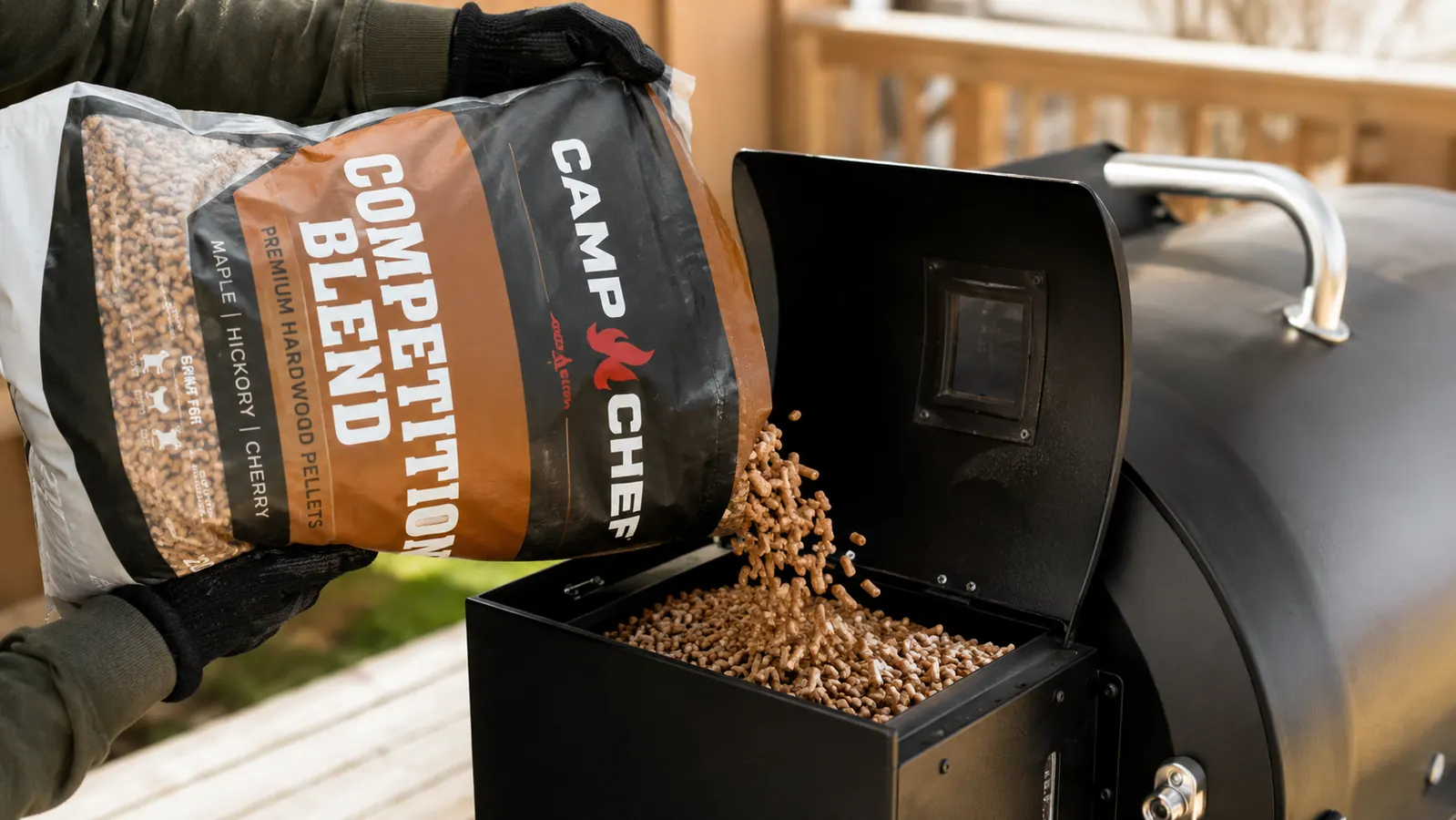
My standard rotation is a 14 pound packer brisket or a couple of pork butts on the weekends, with a rack of spare ribs thrown in when the neighbors are coming over. I keep a 20 pound bag of Camp Chef on the bench and top off the hopper before bed so an overnight cook runs without me standing over it. The first thing I noticed was how even the pellets feed. No clumps, no fines jamming the auger, and the burn stayed steady all night at 225.
On burn rate I got real numbers, not marketing. A full 20 pound bag carried me through roughly two long overnight cooks and a shorter ribs session, call it fourteen to sixteen hours of active smoke per bag. That is a little better than what I was getting out of the cheaper store brands, and it is consistent from the top of the bag to the bottom. I weighed the last bag and it emptied at about the same rate as the first, which is the kind of dependability that lets you plan a cook instead of babysitting a hopper.
One night in particular sold me. I set a couple of 9 pound pork butts on at 8pm, topped the hopper, and went to bed. At 6am the firepot was still feeding steady, the hopper still had enough to finish the cook, and the grease line on the butts was clean with no bitter black. By noon that meat pulled apart like it had been rehearsing. That is the whole reason I keep coming back to this bag for my main-event cooks instead of the bargain bin.
Burn Rate, Hour by Hour
I wanted hard numbers on burn, so I stopped trusting eyeballs and started weighing. At a steady 225 in mild weather my pit drew a hair over a pound and a quarter of pellets an hour, which is how a full bag runs out to that fourteen to sixteen hour stretch. Ran hotter, up around 275 for chicken, and it stepped up nearer a pound and three quarters an hour. The useful part is that it held bag after bag, so I could plan an overnight fill and not worry until morning.
The other thing I watched was how the burn responded when the weather did not cooperate. On two cold, gusty mornings in the forties, the controller spent more time feeding to hold 225 and the hopper dropped a little faster. That is normal for any pellet, but worth knowing before you trust the last quarter of a bag on a cold night cook. I top off before bed on cold weekends and keep a spare partial bag on the bench, and I never had a firepot go hungry at the wrong hour.
I also checked the bottom of every bag for fines before I poured anything, and Camp Chef ran clean down to the last scoop. That matters because a pocket of pellet dust feeds unevenly and can throw a temperature spike at 2am. I saw none of that across the whole case. The auger fed at the same even cadence at hour two and at hour fourteen, which is the quiet reason these bags let a long smoke run boring.
The Ash Story Nobody Puts on the Bag
Ash is the boring part of pellets that decides whether you enjoy yourself or spend the morning with a shop vac. After three or four cooks on a 20 pound bag, I pop the firepot and skim the ash drop, and with Camp Chef the amount I had to clean out was noticeably less than the flaky store bags. The pellets burned down to a fine, light ash instead of leaving a crust that clogged the grate, and that meant the auger and firepot stayed happy for longer stretches.
I saw very few fines in the bag, the dust that settles to the bottom and clogs an auger. That matters more than people think, because a bag heavy with pellets dust burns uneven and can throw your overnight cook sideways at the worst hour. Camp Chef runs clean from the top right down to the last scoop, which is the kind of boring reliability I value more than any flavor claim.
A 20 pound bag of Camp Chef carried me through two overnights and a rack of ribs, and the last scoop fed the auger as clean as the first. That dependability is worth more to me than any smoke gimmick.
The Competition Blend Question, Honestly
Ask any pit guy about competition blends and you will get a different story depending on who is talking. What a competition blend is really doing is mixing hardwoods so you get a rounded smoke instead of one loud wood dominating the cook. On Camp Chef's competition blend, I found the middle ground I was looking for: enough character to call it smoked, not so much that every pork butt tastes identical or bitter. For the mixed rotation I run, that is the Goldilocks spot.
Where I will be straight with you is this. If the one thing you chase is an aggressive, single-flavor smoke, say a pure hickory bomb on a brisket, a competition blend is not it. A blend is deliberately mellow. For a backyard cook who wants good smoke across chicken, pork, and beef without changing bags, that mellowness is a feature. It is the difference between a tool that does one job loudly and a workhorse that handles a whole season.
Flavor Across a Season of Meats
Because I kept one bag in the rotation for four months, I got to run it against the full spread of what a backyard smoker actually cooks. On a 14 pound packer brisket it gave a clean, round beef smoke with no acrid bite, and the bark set up dark without going bitter. On pork butt it was even lighter, letting the rub and the fat do their talking while the wood stayed politely in the background. That is the blend doing its job, stepping back exactly when the meat wants to be the point.
Where the balance really showed was chicken. Dark meat on a hotter cook takes smoke differently than a long pork butt, and a heavy single wood can turn chicken acrid fast. With the Camp Chef blend, thighs came off with skin bronzed and the flesh tasting gently of smoke rather than drowned in it. It did not give the strongest smoke on any single food, but good smoke on all of them without me changing a bag.
For the shorter and the cold jobs it behaved too. Spare ribs picked up a light ring and a clean finish, and in the smoke tube for an off-season cheese cold smoke these made a mild, even smoke that did not turn sour. That versatility is the real argument for keeping one bag instead of a shelf of them.
Cleanup and Daily Friction
I am not going to pretend pellets are a zero-work fuel. You still empty the firepot every few cooks and give the auger tube a glance. But with Camp Chef the schedule is boring and predictable: top off the hopper before bed, empty the ash drop every three or four cooks, and you are done. A bag that jams your auger in the middle of the night turns a simple cook into a disaster, and I did not have that happen once across the whole case.
Storage is the other small thing. The 20 pound bag is a re-sealable doubled bag that I can fold over and clamp on the bench between cooks. I keep it off the concrete floor and it stayed dry through a humid stretch, which matters because wet pellets will swell, jam, and ruin an overnight burn. If you have a way to keep the bag dry and off the ground, a case of these will sit on the bench for the whole season without giving you trouble.
Moisture, Storage, and a Humid Summer
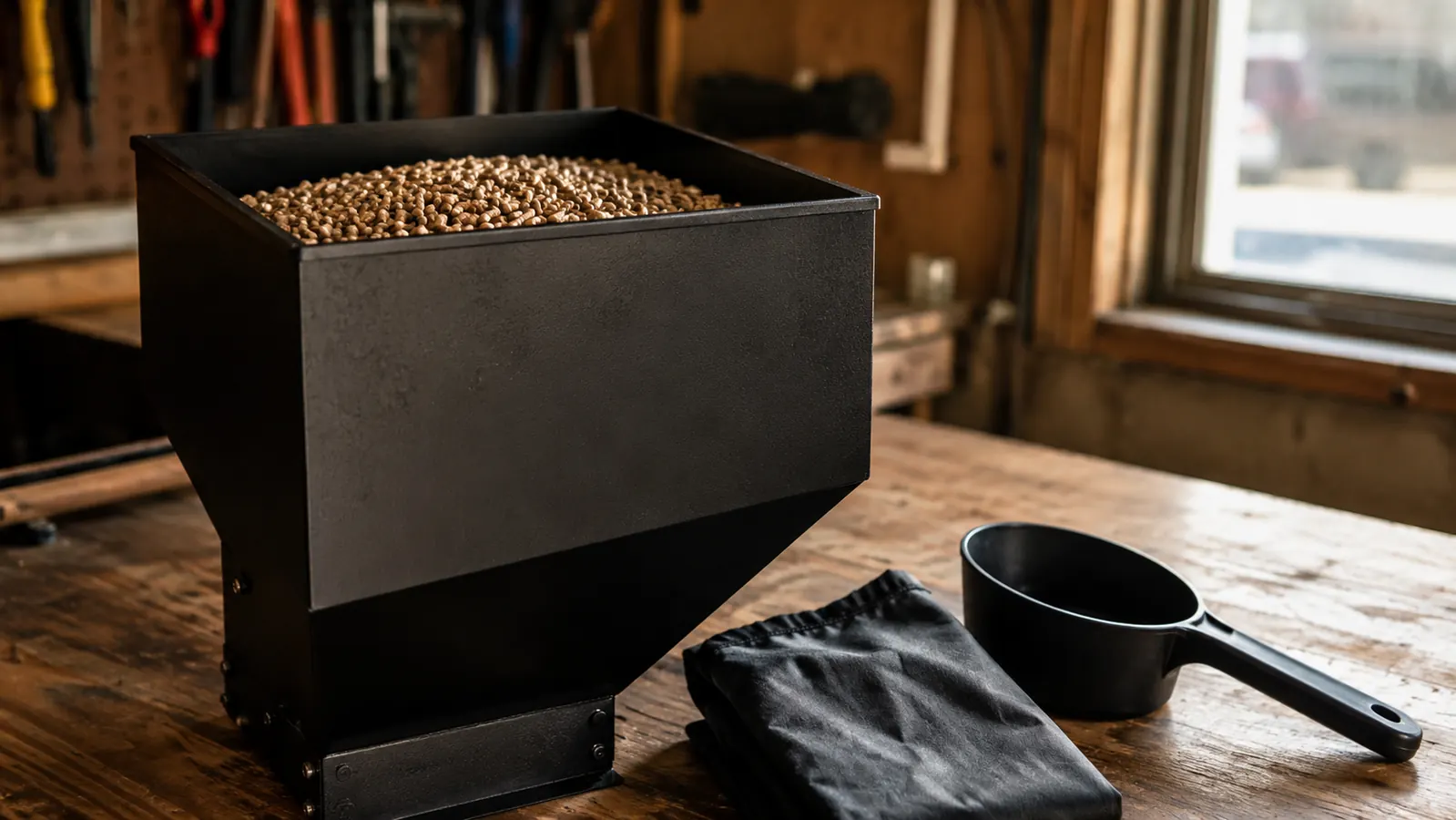
Pellets are finely ground wood, and finely ground wood drinks moisture. Across a humid stretch, storage decided half the outcome before the pit was ever lit. I kept the bag up off the concrete, folded the inner liner tight after every fill, and clamped the outer flap. A pellet soaked with humidity will swell, jam the auger, and stall an overnight burn, and I never wanted to learn that lesson at 3am.
A quick test tells you if a bag has gone south. Take a handful and snap a pellet in two. A dry pellet pops clean; a soggy one bends and crumbles. A few pounds that sat in the sun at the bottom of a bag will bend when everything else snaps, and those are the ones to pitch rather than feed. Handled that way, my case sat on the bench through a wet stretch and every pellet still burned like the day the box arrived.
Value Over a Full Case
I bought a whole case rather than a single bag, which is the way I would tell you to buy any pellet you intend to rely on. The per-pound math works out in your favor when you buy the case, and you get the bonus of the same blend across many cooks, so every cook tastes like the last one. That consistency is the real value, more than any single-flavor trick. A pellet that cooks the same every time is what lets an everyday smoker stop improvising and start executing.
I will close the numbers out plainly. Twelve cooks, four months, one case, and the only adjustment I ever made was topping off a hopper and skimming an ash drop on schedule. No soaked pellets, no mid-cook trip to the hardware store, no second guessing whether the flavor would show up. That is a dull four months in the best way, because the fuel stopped being the variable. When the fuel is boring, the meat gets all the attention it deserves.
What I Liked
- Predictable burn rate I could plan a cook around, consistent from the top of the bag to the bottom
- Clean, fine ash and very few fines, so the auger and firepot stay happy for longer stretches
- Balanced hardwood smoke that shows up without overpowering chicken, pork, or beef
- Re-sealable bag kept the pellets dry and fresh on the bench between cooks
- A whole case cooks the same every time, so a backyard rotation stays consistent
Where It Falls Short
- Competition blend is deliberately mellow, so a single-flavor smoke purist will be underwhelmed
- Not the cheapest bag per pound if you buy one at a time instead of a case
- You still empty the ash drop every few cooks, no pellet is entirely zero-work
Where the Blend Still Comes Up Short
I want to be straight about where this bag does not help you. If your whole identity on the smoker is one loud wood, a hickory or mesquite punch you can taste from across the yard, a competition blend will feel like it is holding back. And if you mostly cook warmer and faster, burgers and chicken at 350 or hotter, you will not taste enough difference between this and a cheaper pellet to care.
Cold smoke is the other honest limit. For a true cold smoke you are better served putting these through a tube at a low temperature than relying on the main firepot, which runs too hot to keep dairy cold. That is not a knock on the pellet, just the right tool for the right job.
Who This Is For
Camp Chef Competition Blend is for the weekend cook who smokes a mix of meats and wants one dependable bag instead of a shelf of specialty flavors. If you run brisket one Saturday, pork the next, and ribs the weekend after, this is the pellet that lets you stop changing bags and start getting consistent food. It is also the right choice if you are tired of greasy-feeding store-brand pellets that jam the auger at midnight. Shown once how to store it and top the hopper, you can run this bag all season and never think about it again.
Who Should Skip It
Skip it if the only smoke you will accept is a loud, single-flavor punch and you refuse to compromise. A competition blend is built to sit in the middle, so if you want a pure hickory or pure mesquite identity on every cook, buy the dedicated bags instead. And if you already buy premium single-wood pellets and love the specific character they give, this mellow blend will not win you over. For everyone who wants clean, dependable smoke across a whole season of different cooks, it is a quiet upgrade that earned my bench space.
A whole case, twelve cooks, zero auger jams and zero guessing
I bought these Camp Chef pellets because I was tired of rolling the dice at the hardware store, and four months later I would buy the case again. See today's price and the full bag spec on Amazon.
Amazon Check Today's Price on Amazon →