
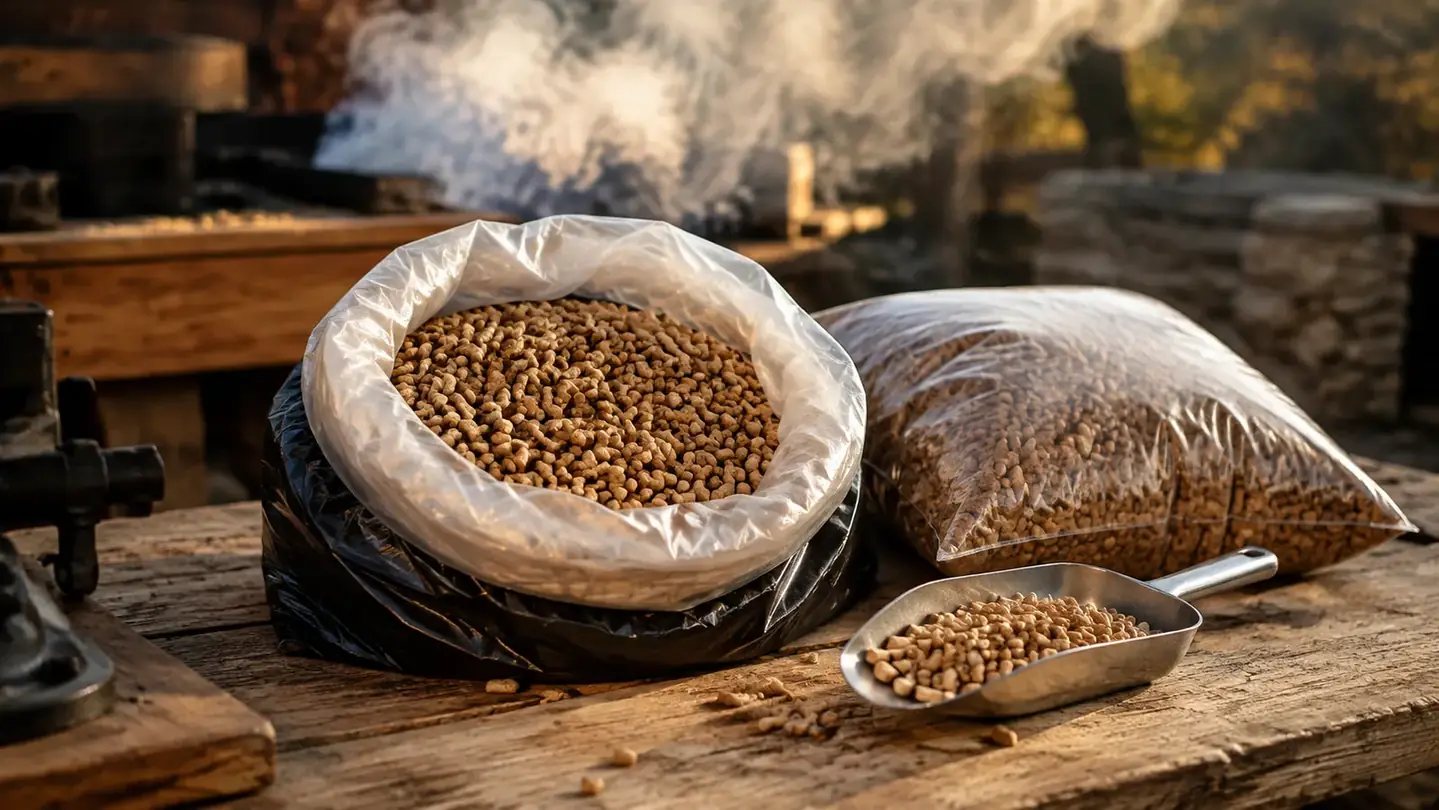
The short answer, in plain words: for day-in, day-out smoking on a pellet grill, I reach for the Camp Chef Competition Blend, and it isn't close. Both bags are real hardwood, both will put a proper ring on a brisket, and neither is a bad buy. But the Camp Chef is cheaper per pound, it burns cleaner with less ash to shovel out, and its four-wood blend gives you a versatile smoke that plays across pork, chicken, and beef. The bag of Traeger pellets I tested made great barbecue too. It just charges you a premium for a name that doesn't put noticeably more flavor on the meat.
I'm Ray, and I've been running a backyard pit for thirty years, long enough to have shoveled charcoal into a bracket smoker before most folks on this site were born. I've burned through a full season of both these pellet lines side by side in a single hopper. I'll keep it honest: blend makeup, smoke flavor, ash in the tray, bag consistency, storage, which machine each suits, and the grind of buying it by the bag. Here's what actually happens when you feed a smoker these two.
Before I get into the differences, one thing worth saying up front. Pellets are not where the magic of a great cook lives. A clean, dry, evenly burning hardwood pellet gives you a stable baseline, and the rest is your temps, your meat, and your patience. What I compare here is which bag gives you that baseline with the least fuss and the least money out of pocket.
| Camp Chef Competition Blend | Traeger Pellets | |
|---|---|---|
| Blend makeup | 100% hardwood, a classic oak, hickory, maple, and cherry competition blend | Hardwood blend too, with its own signature mix across its line |
| Smoke character | Clean, even smoke that carries across pork, chicken, and beef without overpowering any one | Good natural smoke, a touch softer on some of its signature blends |
| Ash / cleanup | Burns cleaner, leaves a light, even ash that sweeps out of the tray in one pass | Leaves a comparable tray but feels dustier after back-to-back long cooks |
| Bag consistency | Full of dense, uniform pellets bag after bag, few fines and few broken bits | Fine in my runs, though pellets ranged a little more in length and some bags were dustier |
| Availability | Widely stocked at big box and online, easy to grab a bag on short notice | Widely stocked too, at a wider spread of specialty single-wood lines |
| Flavor variety | One dependable competition blend that handles most cooks | A broader menu of single woods if you like to match wood to meat |
| Price per pound | A roughly 20 lb bag that lands at a noticeably lower current price per pound | You pay a real premium for the name on the bag for roughly the same weight |
| Best for | Everyday smoking of everything, from weeknight chicken to a long Sunday brisket | Cookers who want the broadest menu of specialty woods and don't mind the premium |
Where Camp Chef Wins
Camp Chef wins on the two things that matter to me at the end of a long cook: price and clean burn. Feed a smoker for a season and the per-pound gap stacks up fast, especially if you smoke most weekends and a fair number of weeknights. I'd rather spend the difference on a better packer than on a pellet brand name, and nothing about the flavor on the plate talked me out of that.
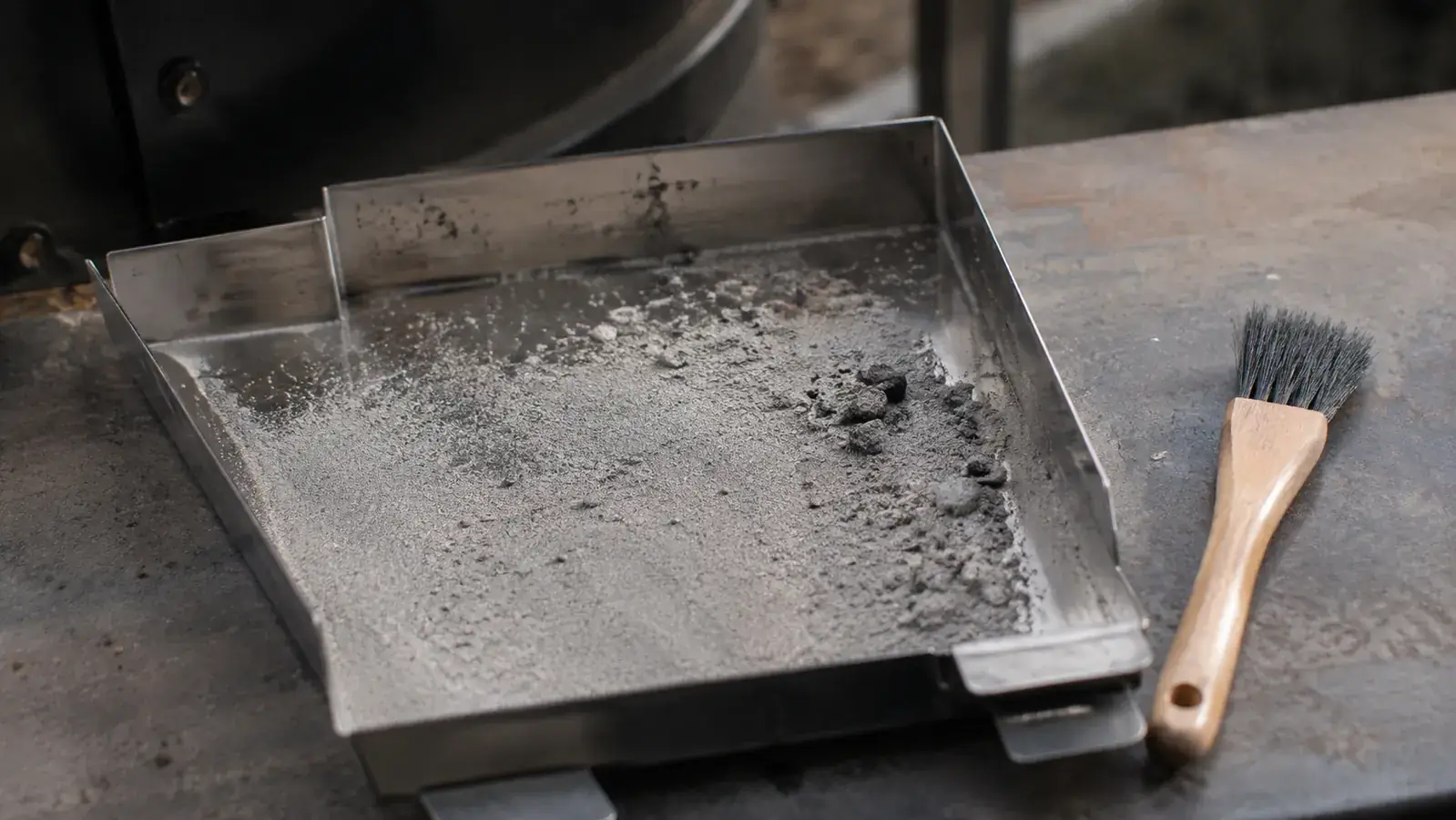
The clean burn is undersold until you've spent an evening scraping a tray. The Camp Chef competition blend runs through a long cook leaving a thin, even, light gray ash that my shop-style tray brush clears in a single sweep. My Traeger runs left more of a mess waiting in the corners of the tray. It is not a dealbreaker on either, but when you're done at ten o'clock and the tray still needs tending, the one that sweeps clean in one pass wins the night.
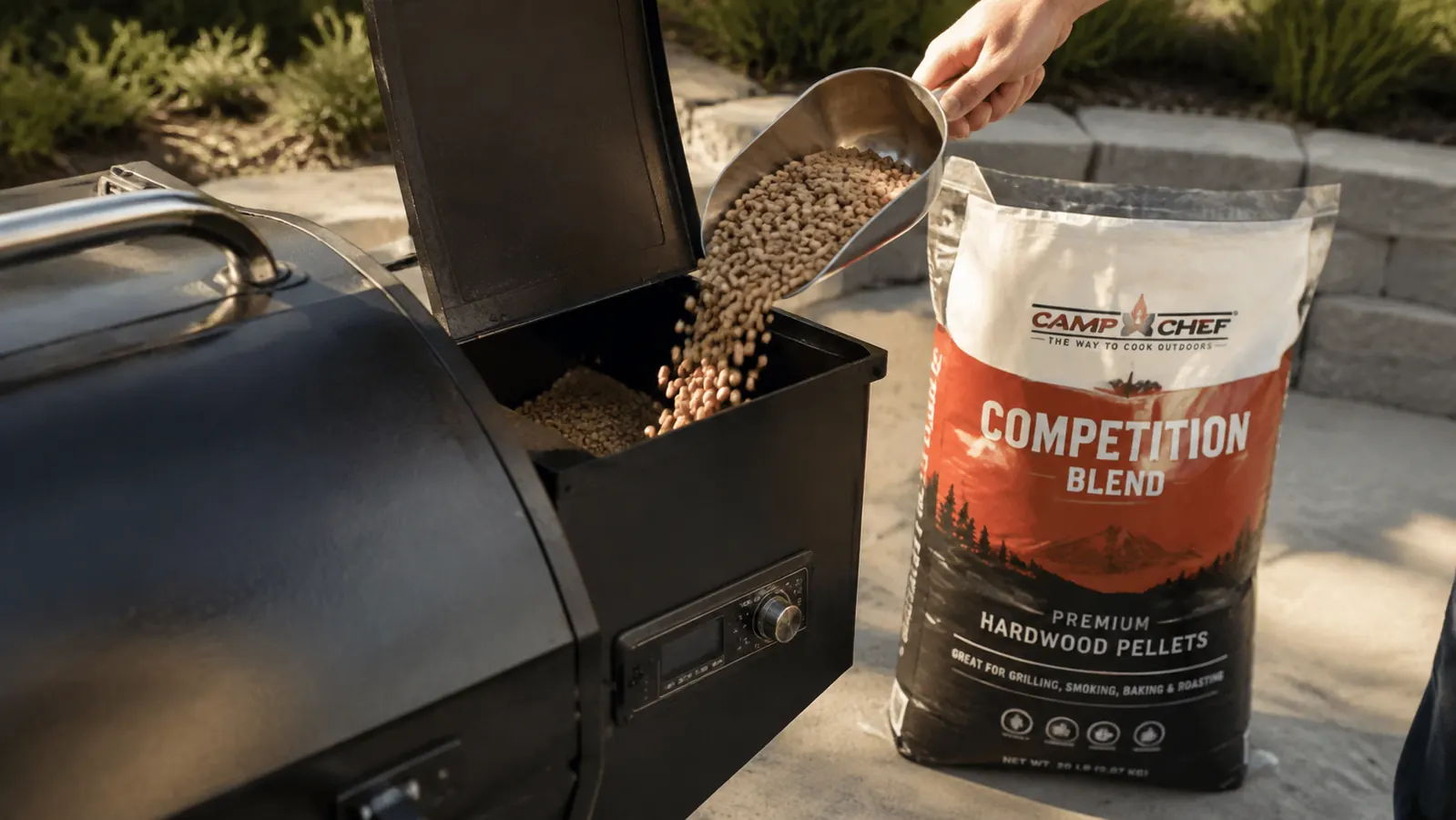
Part of that clean burn comes from what's inside the bag. The Camp Chef competition blend is oak with hickory, maple, and cherry in the mix, and it holds together as dense, uniform little cylinders without a lot of dust in the bottom of the bag. Denser pellet means a steadier fire and less breakage in the auger, and that steadiness shows up as an even smoke instead of a smoky then clean then smoky routine you can get from a bag with a lot of loose fines in it.
I also found the Camp Chef bag easy to buy day to day. It sits on the shelf at the big box store a couple miles from my house, which sounds trivial until you're mid-cook on a Sunday and the hopper's getting low. That convenience matters more to a regular pit runner than to someone smoking once a month.
Where Traeger Wins
I'll give Traeger the straight answer it earns: flavor variety, and a reputation for consistency that a lot of people trust without thinking about it. If you like to match your wood to your cook, a beef rib day with one of their single-wood lines, a pork shoulder day with another, Traeger gives you the widest menu in the aisle. Some cooks simply prefer that level of control, and there's real value in it.
Traeger's bag also delivered reliable, even smoke on my runs, nothing bitter, nothing off, just steady. There's a confidence that comes with a name everybody at the pit house knows, even if a fair slice of that confidence is marketing. It just was not worth the premium to me once the plate couldn't tell the two apart.
Where Traeger shines is the specialty lineup. If you get a hankering for mesquite on a brisket or want a pure apple wood on a pork butt, the single-wood bags give you a clean, unblended character you cannot get out of a competition blend. A competition blend, Camp Chef's included, is built to be a good all-rounder, which means it slightly rounds off the edges of any single wood. The person who really wants that strong single-note smoke is exactly who should look at Traeger's wider shelf.
Blend Composition: What Each Bag Actually Mixes
Let's spend a minute on the composition, because it drives everything else. Camp Chef's competition blend is four hardwoods: oak as the base, with hickory, maple, and cherry layered in. Oak gives you an even, dependable burn and a mild backbone, hickory adds the classic savory smoke most of us think of as barbecue, maple brings a touch of sweetness, and cherry rounds it out with a mild fruit note and that reddish smoke ring color. It's a balanced recipe designed to never bully the meat.
Traeger's approach leans on the same principle, real hardwood with a signature mix, but the real difference is breadth. Camp Chef gives you one well-rounded bag that covers almost every cook, while Traeger splits the job across a dozen single-wood bags you can tune meat by meat. Neither is wrong. One is the convenience of a single dependable bag, the other is the control of a full wood library.
Flavor Out of the Hopper: What I Actually Tasted
I ran both bags over the same cooks to keep it fair: a pork butt at 225 for around ten hours, a chicken at 350, a rack of beef ribs, and a couple of briskets. On the pork butt and the briskets, I could not tell the two bags apart on the plate. Both gave a clean smoke ring and that deep, lingering hardwood flavor, and neither left any bitterness to fight the bark.
Where a difference did show up, and it was a small one, was on the lighter meats. The Camp Chef's hint of maple and cherry read as a faint sweetness on chicken and on a mild piece of fish, which I happen to like. The Traeger bag I tested was slightly more neutral there, not worse, just less character. If your pit mostly sees pork and beef, this barely matters. If you smoke a lot of poultry or fish, the Camp Chef's extra fruit note is a real, if gentle, edge.
Ash, Burn, and Cleanup Over a Season
Ash is the part nobody wants to talk about until they're on their hands and knees in front of a cold tray. Across a full season, the Camp Chef competition blend produced a thinner, finer, lighter ash that settled evenly in the tray. The Traeger bag ran fine too, but it left a slightly dustier load, ash that clung to the corners and needed a second pass to get out. Over twenty-odd cooks that's maybe an extra ten minutes of dinking around a season, hardly a crisis, but it is a real, repeatable difference.
Burn rate was close between the two, which is what I expected from two quality hardwoods. I did not see one bag dramatically outlast the other on the same cook at the same temp. The real money difference is in what the bag costs and how clean it burns, not in some imagined magic that makes one go twice as far. Buy on price and burn quality and you'll get your money's worth either way.
Bag Consistency: Whole Pellets vs Dust
Dig into the bottom of a pellet bag and you'll find fines, the sawdust and broken bits that shipping shakes loose. A bag heavy with fines is a frustration because it feeds unevenly and can cause the auger to hiccup. In the bags I opened, the Camp Chef ran consistently dense and uniform with very little dust in the bottom bag after bag. That uniformity is a quiet workhorse quality, the kind of thing you don't appreciate until you hit a bad bag of something else.
Traeger's bags I tested were fine too, though the pellets varied a little more in length and a couple had a dustier bottom. Not one caused a feed problem in my runs, so I'd call it a mild edge rather than a flaw. If bag-to-bag consistency is your priority, the Camp Chef came out comfortably ahead across the bags I put through the hopper.
Storing Pellets and Making a Bag Last
No matter which bag you buy, storage decides how good it tastes. Pellets are compressed wood and they drink moisture. Leave a bag in a damp shed through a wet spring and it'll swell, crumble, and turn to mush in the hopper, and no brand on earth fixes a soggy pellet. I keep both these bags in a sealed bin with a few desiccant packs in it, off the concrete floor, and I bring the bin inside the garage over the humid months.
The practical takeaway is that both are about equal once you protect them sensibly, so storage rarely separates Camp Chef from Traeger. It separates people who store pellets right from people who don't. Buy whichever bag, store it dry, close the bin, and you'll get a good season out of it.
Which Smoker Each Bag Suits Best
Both are all-purpose hardwood pellets that run happily in any smoker that takes a standard pellet, Traeger's own machines included. I ran them through a side-entry hopper and a front-loading model, and neither bag tripped up an auger or threw off a temp. If you own a Traeger and want a cheaper everyday bag, the Camp Chef competition blend drops right in with zero fuss.
The one place I'd tell you to reach for Traeger is if you specifically want a strong single wood like mesquite or pure apple and can't find it local. For the everyday cook, the machine doesn't care which bag you feed it. It wants dry, uniform pellets at a steady size, and both deliver that. Let the price and the flavor you actually like decide, not your grill's brand badge.
Want the clean-burning everyday pellet that saves you money by the bag?
If you smoke everything from weeknight chicken to a long Sunday brisket and you'd rather spend on better meat than a premium brand name, the Camp Chef Competition Blend is the bag I keep in the garage. Check today's price and load the hopper.
Amazon Check Today's Price on Amazon →What I'd Tell a Friend at the Pit
If a buddy asked me at the fence which bag to pour in, I'd tell him the same thing I do in this article. Start with the Camp Chef competition blend, get a season under your belt, and bank the difference in what the pellets cost. If you reach a point where you find yourself hankering for a strong single wood, a pure mesquite rib day or a straight apple pork butt, then go grab a specialty bag from Traeger or whoever stocks it and enjoy the change of pace.
That's the honest middle path, and it's the one I actually live by. The Camp Chef handles the weekly grind, and the specialty bags are a treat for when the cook calls for it. Run the everyday workhorse, keep the door open for the occasional specialty wood, and you'll never feel shortchanged by either.
Both put a clean ring on a brisket and neither left a trace of bitterness, but only one of them saved me real money by the bag all season long.
Who Should Buy Which
Buy the Camp Chef Competition Blend if you smoke a little of everything, if you put the dollars toward meat instead of branding, and if you value an easy cleanup tray at the end of a long day. It is the dependable, honest workhorse that deserves the everyday slot in your hopper. Buy the Traeger pellets if you want the broadest single-wood menu to match each meat, or if the trusted name on the bag genuinely buys you peace of mind, and you're comfortable paying the premium for it. Same hardwood, same good smoke on the plate, just two different ideas about what your money is paying for.
My honest advice, after a season of burning both, is to let your buying habits decide. If you want one bag that does the job for pork, chicken, and beef alike, the Camp Chef is the smarter everyday pick and friendlier on the wallet. If you like to match the wood to the meat and would happily spend for that control, that's where Traeger's wider lineup earns its keep. Neither choice will ruin a brisket.
My pick: the Camp Chef Competition Blend for everyday smoke and cleanup
I roll one bag into the garage at a time, and the Camp Chef competition blend is the one that rides in there now. Good clean smoke, less ash, and a friendlier price per pound. If that sounds like your pit too, start here and check today's price.
Amazon Check Today's Price on Amazon →