
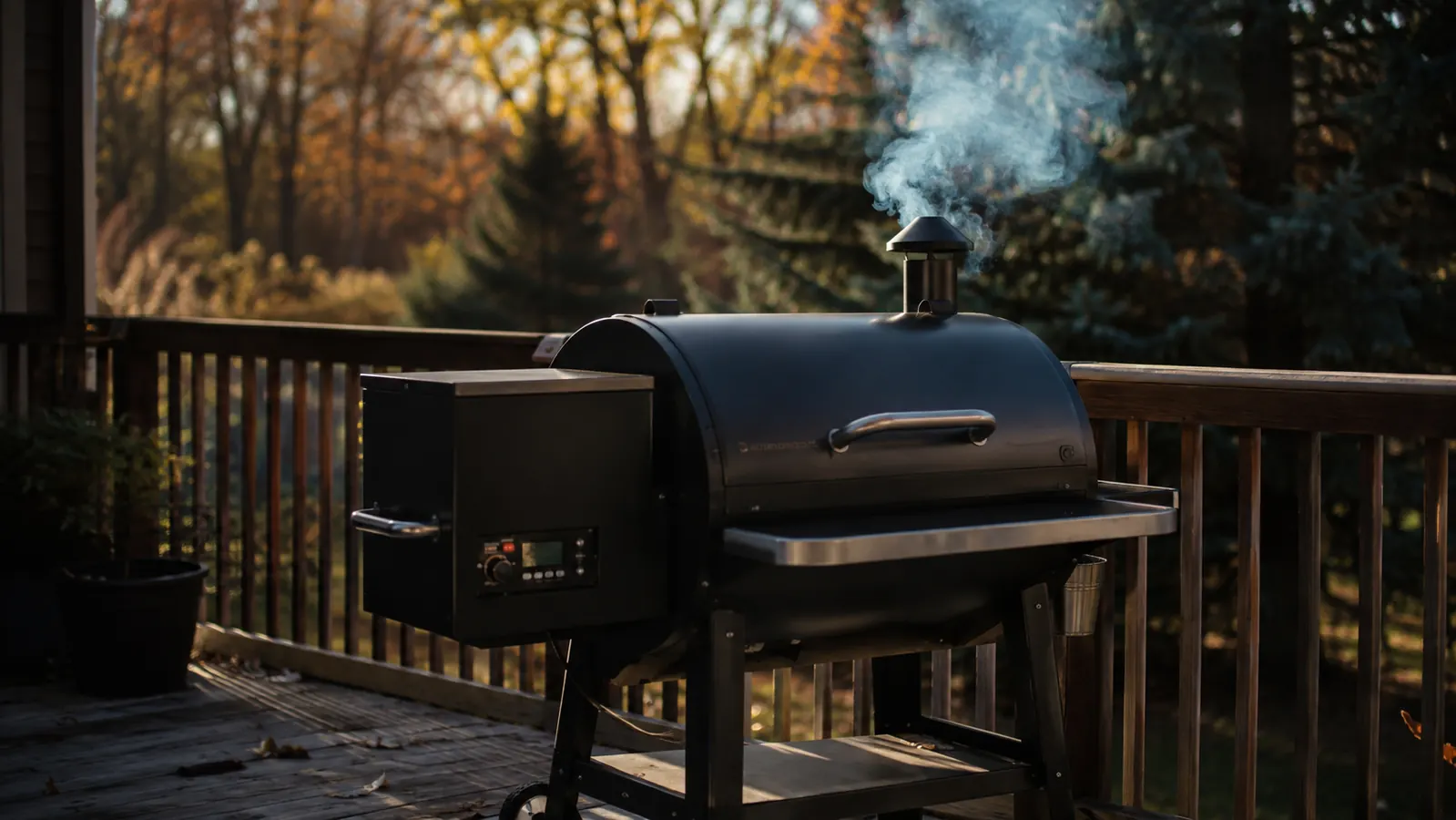
I'll start with the thing most pellet reviews won't tell you: a bag of pellets is the last thing any of us wants to overthink. You've stood in front of the rack at the store, a dozen bags of hardwood staring back, none of them saying a word about what they'll actually do on an eight-hour brisket. I burned through the bargain bags for years, the ones that snap into dust in your hands and leave you kneeling in the dark scrubbing gray ash out of the firepot. Then I switched to Camp Chef Competition Blend and ran it hard for five months. This is the honest accounting of that.
I'm Ray, 58, and I've been running pellet grills in the backyard since before the WiFi controllers showed up. I spend my weekends fishing, lifting, and running, and I run a smoker the same way I train: show me once, then let me work at my own pace. I like gear that simplifies a cook, and I've got no patience for gear that overcomplicates one. So this review is written the way I'd talk to you over the tailgate: plain, specific, and honest about the warts.
The Quick Verdict
A clean-burning hardwood blend that gives you real smoke at a fair everyday price. Buy it for consistency and value. Don't buy it expecting one bag to be perfect for every meat.
Amazon Check Today's Price →Clean-burning hardwood smoke without the guesswork
If you want a pellet you can trust bag after bag, without reading a care label like it's a mortgage document, Camp Chef Competition Blend has earned its spot in my hopper. It's my everyday pick for a reason.
Amazon Check Today's Price on Amazon →How I've Used It
I don't test pellets on a lab bench. I test them the way you'll use them. Across five months I worked through three 20 lb bags of Camp Chef Competition Blend, sixty pounds total, on about eighteen cooks. That covered a couple of pork butts run at 225 for nine hours each, two briskets, a spatchcocked turkey, whole chicken thighs by the tray, and a sack of burgers and wings on the hotter side. That's a broad enough spread to tell you how a neutral blend behaves across the meats most of us actually smoke.
I tracked the same three things every cook: how low the temperature swung, whether the auger jammed or the firepot clogged, and what the ash looked like at cleanup. I kept an eye on the whole thing with a wireless probe so I wasn't guessing at the pit side. I also kept the first bag sealed in a dry tote and deliberately left the second bag's rolled top open on the porch for six weeks, because the weather you actually store pellets in matters as much as any label claim.
And I'll be straight that this is one person's grill in one climate. Your grill, your humidity, your brand of controller all change the numbers a little. Your feed rate and your firepot size change how much ash accumulates. But the character of the pellet, how it burns, how it smells, how much dust it pours, that comes through steady no matter the rig. That's what I'm really reviewing here.
What's Actually In the Bag
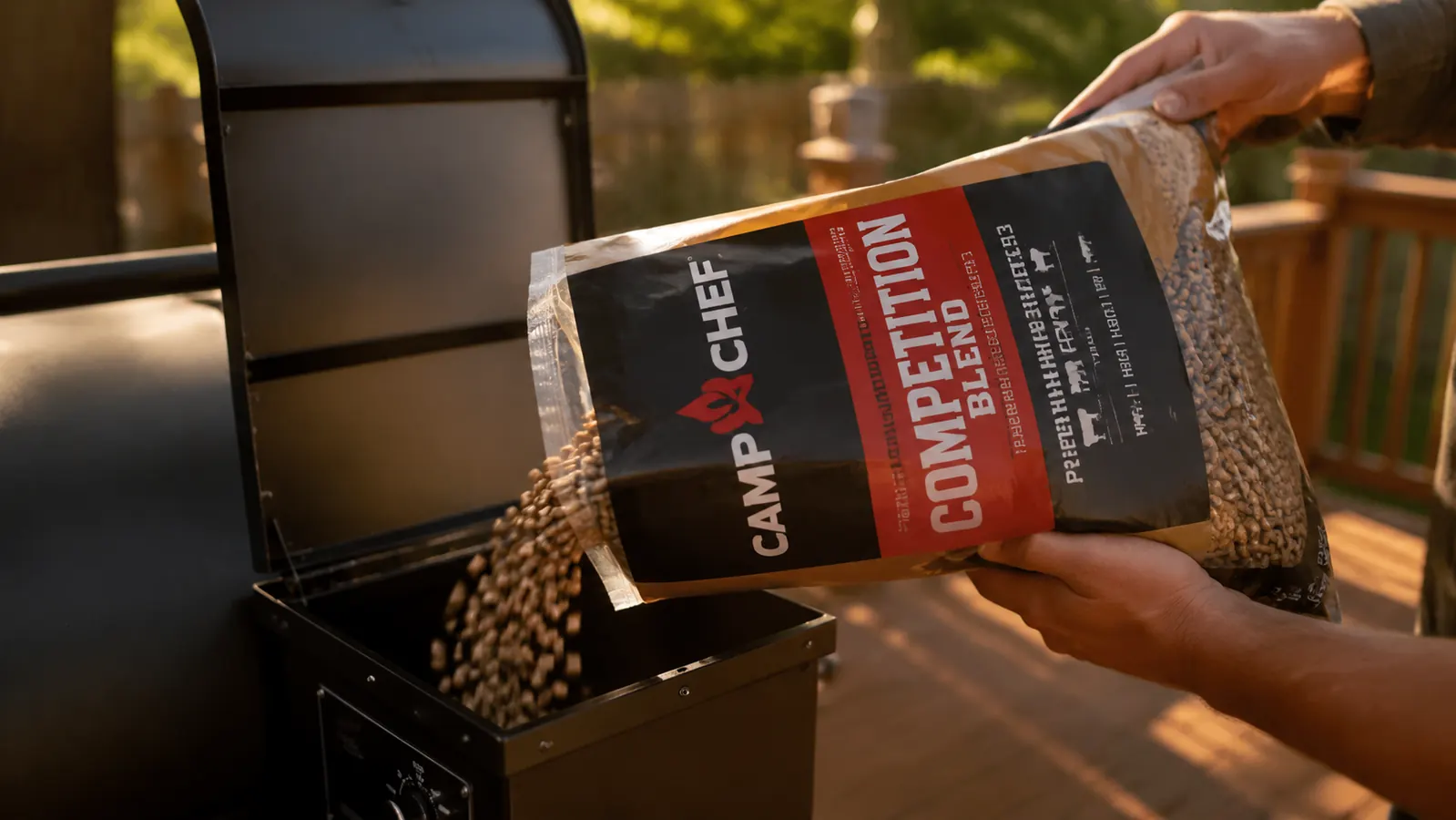
Competition Blend is a mix of hardwoods. The point of a blend is that no single wood gets to dominate the smoke, so it plays nice across chicken, pork, and beef without you having to swap bags between cooks. That's the honest job of this pellet, and it does that job well. If you cook a variety of meat, you load the hopper once and forget about it.
Here's what I actually measure when I pour a fresh bag. The pellets are dense and hard, the good sign, and they hold their shape in my hand instead of crumbling into sawdust. I got very little dust at the bottom of the bag, which is more than I can say for the two cheaper brands I used to buy. Camp Chef runs what I'd call a clean manufacturing line, and it shows in how few fines you pour into the hopper. Fewer fines mean the auger feeds evenly and you don't get the fine-dust clogs that plague the cheap stuff.
One detail nobody mentions is how the bag smells the morning you first open it. A fresh bag of Camp Chef has a clean, sweet wood smell, like a lumberyard after a rain, and it carries straight through to the smoke. The cheaper bags I used to run smelled more like baked dust. It sounds like a small thing, but when you're standing at the hopper at six in the morning loading up for a twelve-hour butt, that first whiff tells you what the next half day is going to taste like. I've opened enough bags to trust that smell as a warning sign these days.
The tradeoff with a blend is that you give up the sharp personality of a straight wood. If you want an unmistakable hickory punch on a brisket, or the sweet fruit-wood note on a pork butt, a solo bag will give you more of that. Competition Blend sits in the middle on purpose, which is the feature for most of us and the mildness that some folks will never warm up to. It's the tradeoff that defines this whole review.
How It Burned Over Three Bags
Temperature control was consistent. My controller held 225 within about ten degrees through the long cooks, and I never saw a flameout or a clogged auger in eighteen cooks. That reliability is half the reason I keep coming back to this pellet. Nothing about the burn is going to surprise you mid-cook, which is exactly what you want when the meat is on and you're out back lifting or running and checking in from your phone.
Smoke flavor landed somewhere between light and medium, which suits most palates without leaving bitter notes. On chicken thighs the smoke came through clean, not creosote-heavy, and on the briskets I got a good ring and a mellow, even bark. For a backyard rig cooking a spread of different meats across a weekend, that's the right balance. You get the payoff of real hardwood smoke without the acrid edge that turns people off smoked food.
Eighteen cooks, sixty pounds, not one flameout. That reliability is the whole point of a blend, and it's why I keep this bag in the tote.
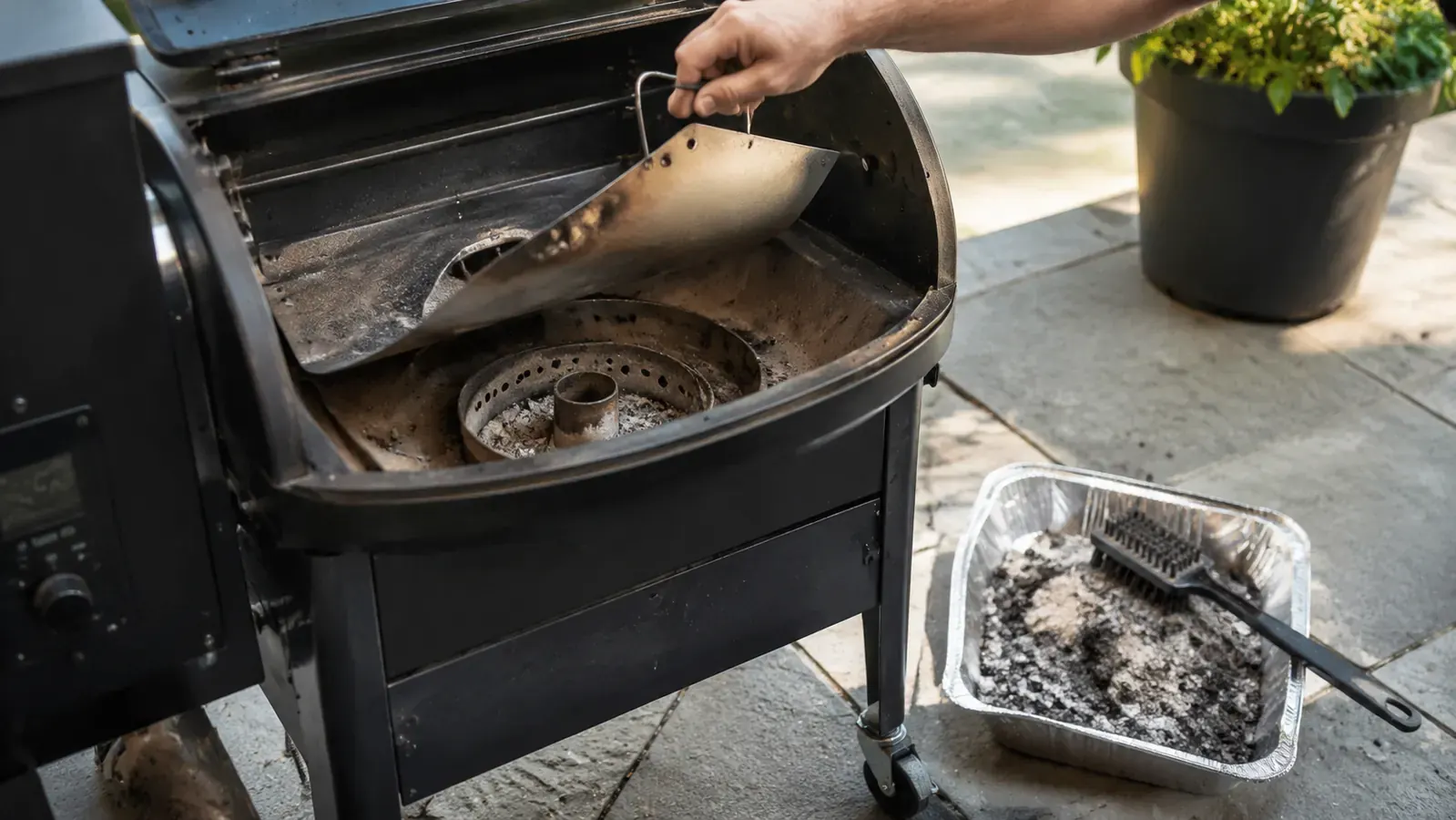
But it's not all roses, and this is the part the marketing skips. Ash is the honest downside. Pellets in this class leave more ash than a quality single-species bag, and with a forty or fifty pound run-in, you'll be dealing with a packed firepot by the end. I got in the habit of a quick shop-vac pass before the second big cook of the weekend. It's fifteen minutes and it's not hard, but if you went in expecting zero maintenance, that expectation will cost you a mid-cook temperature dip when the ash pile starts to choke the fire. You learn to read the tell: the smoke thins and the pit creeps cooler right when you'd rather be doing anything else.
The ash lesson took me two bags to get right. On the first long weekend I let the firepot run a full thirty hours across two big cooks and paid for it with a creeping temperature dip about hour six of the second pork butt, the pit sitting a stubborn twenty degrees low that I only fixed by killing it, sweeping the firepot, and relighting. Once I made the pass a habit, a quick ten-minute sweep with the shop vac and a paper towel dab of oil on the grates before each long cook, the whole problem vanished. These pellets burn clean enough that you won't see trouble at eight hours on a single cook. It's the back-to-back weekend sessions that pile the ash up, and that honestly caught me by surprise the first time.
How the Flavor Holds Up Across Cooks
A pellet has to earn its keep beyond one good brisket, so I paid attention to how the same bag behaved on quick hot cooks versus the long slow ones. On burgers and wings pushed up around 400, the blend stayed neutral and clean, no acrid pop, which more than a few cheaper pellets deliver at high temp. On the spatchcocked turkey it gave enough smoke to taste it without spraying away the poultry. That versatility is the quiet strength of a well-made blend.
The one meal that kept me honest was a second brisket, the same cut I'd done a month earlier with a straight hickory bag. Side by side in my memory, the Camp Chef blend gave a softer, rounder bark and a milder smoke. It was a better everyday bite but a less dramatic one. If your table is the folks who say they don't like smoky food, that mildness is a feature. If you're chasing the boldest bark you can pull, it's the reason to reach past this bag.
The Storage and Consistency Catch
Here's what nobody tells you, and it's the biggest single thing I found. A 20 lb paper bag with a rolled top is not moisture-proof. The bag I left open on the porch for six weeks turned into a bag of swollen, crumbly pellets that burned hot and erratic and pushed my firepot ash to a new level. That's not Camp Chef's fault, it's physics, but it's worth knowing before you buy a whole lot at once and park it in a damp garage.
I want to be specific about that moisture thing because it cost me an actual cook. I left the open bag on the porch through a stretch of damp nights, and the next Sunday those swollen pellets made the firepot behave like a tiny volcano, the temp climbing thirty degrees past the dial before settling back down. The meat survived, but it barked up uneven and I had to babysit a cook that should have run itself. Store the bag dry and none of that happens. I keep my tote in the garage on a shelf, never on the bare concrete floor where it sweats underneath, and I've had zero moisture trouble since I made that my rule.
The fix is boring and free: pour the bag into a dry, sealed container the day it arrives and keep it out of the rain. Do that and these pellets burn exactly the same on the last cook of the bag as the first. I can't say that about the cheaper brands I used to chase. That consistency is real and it's the reason Camp Chef gets my money month after month. It turns a product that could be a headache into one that never crosses my mind until I refill the hopper.
On bag-to-bag variation, I saw very little across my three bags, and that's a genuine strength. Some budget pellets vary enough between batches that you adjust your cook for the bag rather than the meat. I didn't have to do that with these. What you buy today behaves like what you buy next month, which matters when you find a bag you trust and want to reorder it for a whole season of cooks.
One thing worth knowing before you order: check the current price against the bag size, because the per-pound math is where value actually lives. Camp Chef Competition Blend lands at a fair everyday number for a 20 lb bag of quality hardwood, and when a multi-bag deal shows up it becomes hard to beat. I've never paid the full everyday price because I stock up a few bags at a time and tuck them straight into the dry tote. If you're going to smoke regularly, buying in quantity and storing it right is how you get the best of this pellet.
Alternatives I Considered
Before settling on Camp Chef as my everyday, I ran the honest comparison game. The lower-cost house brands I started with were cheaper per bag but gave me inconsistent burns and a pile of fines, so the actual value fell apart once I was chipping ash and fighting clogs. On the other end, the premium single-wood lines burned cleaner and put out a bolder smoke, and they cost a good deal more per bag. For a whole season of mixed weekend cooks, the premium bag is hard to justify on the wallet.
Camp Chef Competition Blend splits that difference better than anything I tried. You pay a fair everyday price, you get a consistent clean burn, and you get smoke that works on just about everything you'll put in the pit. If you're strictly a brisket guy who wants nothing but hickory, you'll be happier with a dedicated bag. But if you cook all kinds of meat and want one dependable pellet in the tote, the blend is the better money.
What I Liked
- Very consistent bag to bag, cook to cook
- Little dust or fines at the bottom of the bag
- Clean burn with no flameouts in eighteen cooks
- Neutral hardwood smoke that suits chicken, pork, and beef
- Fair everyday price for the quality
Where It Falls Short
- Leaves more ash than a premium single-wood pellet
- Competition blend means no strong single-wood character
- Paper bag rolls open easily and pulls moisture if not stored sealed
- Mild flavor will underwhelm anyone who wants a heavy smoke punch
Who This Is For
Buy Camp Chef Competition Blend if you smoke a variety of meats and want one bag you can reach for without thinking. If you're a weekend cook doing a butt in the spring, chicken all summer, a brisket when company's coming, the neutral blend is a gift. You load the hopper, set the temp, and let it run. If you need to stock a lot at once and can dedicate a dry, airtight tote to it, the consistency and the price make it an easy everyday pick.
Who Should Skip It
Skip it if you're chasing a signature smoke on one kind of meat. A dedicated hickory pellet will give your brisket more of that assertive bite, and a fruit wood will give pork and poultry a sweeter note. If you'd rather clean out a barely-there firepot than touch a shop vac, spend up for a lower-ash premium line. And if you buy pellets by the pallet and plan to leave them sitting in a damp shed through a wet season, no paper bag will save you, so budget for storage you'll actually use.
The Bottom Line
After sixty pounds and eighteen cooks, I'd tell a buddy to buy Camp Chef Competition Blend as his everyday pellet without a second thought. It burns clean, it runs consistent, and it costs about what it should. The two things to know going in: it'll leave ash you need to sweep once in a while, and you should keep every bag sealed and dry. Do those two small things and this is a boring, dependable, excellent pellet, which in my book is the highest praise there is.
Stock your tote with a pellet you can trust
If a reliable everyday pellet sounds like your speed, Camp Chef Competition Blend is what I reach for. Keep a dry tote handy and you're set for the whole season.
Amazon Check Today's Price on Amazon →