
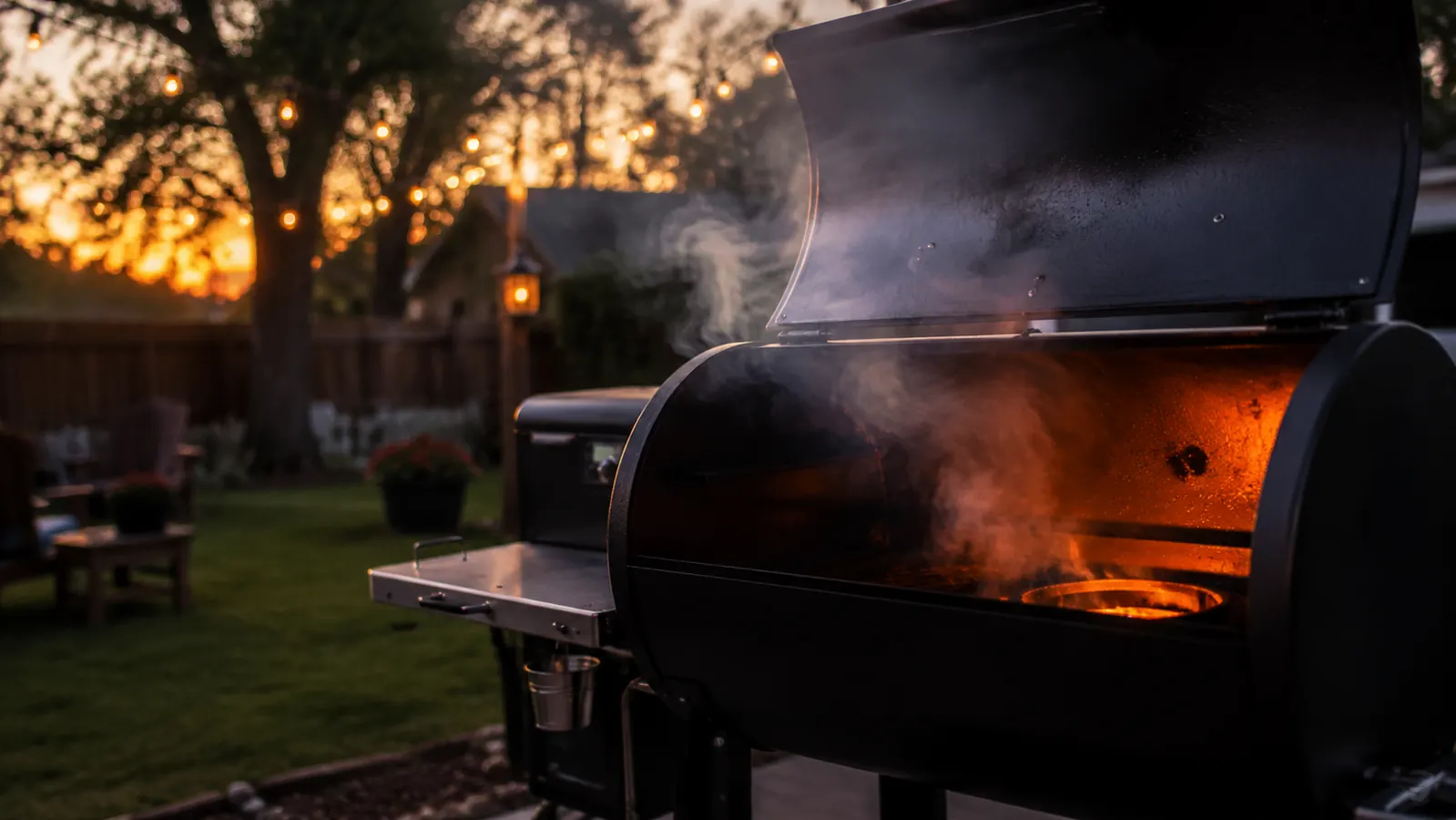
Every pellet grill review you read has the same shape. They tell you it holds temperature, the app works, the meat comes out good, click the link. What almost none of them tell you is the stuff you only find out on the third cook, or the ten minute talk with a neighbor who already owns one. I have run the Traeger Pro 22 through a full season in my backyard, from a damp early spring to the thick of summer, and I kept a running list of the details most reviewers are too polite to mention. This is that list. Not the brochure version. The version you would get if I handed you a beer and let you stand at the pit with me for an hour.
To be fair up front: I like this grill. It earned its spot on my patio and I would buy it again. But liking a grill and telling you everything about it are two different jobs, and this review is the second one. The Traeger Pro 22 is a good mid-sized pellet cooker, and it is also a machine with habits you should know about before the box shows up. Here is the honest breakdown.
The Quick Verdict
The Traeger Pro 22 is a dependable set-and-forget pellet cooker for a family that wants good smoked meat without playing firekeeper. What nobody tells you is it also drinks pellets, depends on a wall outlet and an app, and has a shutdown cycle you cannot rush. Know those going in and you will be happy with it. Expect a stick-burner smoke bomb or a true grilling machine and you will not.
Amazon Check Today's Price →The grill that quietly changed my Saturday smoke routine
For all its quirks, the Pro 22 is the reason I still get a brisket lunch without spending all morning by the smoke. If the honest picture here sounds like your kind of cook, see today's price on Amazon and read the full spec list before you decide.
Amazon Check Today's Price on Amazon →How I've Used It
I cook on the Traeger Pro 22 most weekends, weather permitting, and the rotation has been predictable: pork shoulders, a brisket here and there, racks of ribs, and a lot of whole chickens at 300 something. The 572 square inches of grate handles a family dinner plus leftovers, and a full brisket with a pan of beans beside it fits without much convincing. When I want to feed the block I load it up, and it has never once run out of room on me.
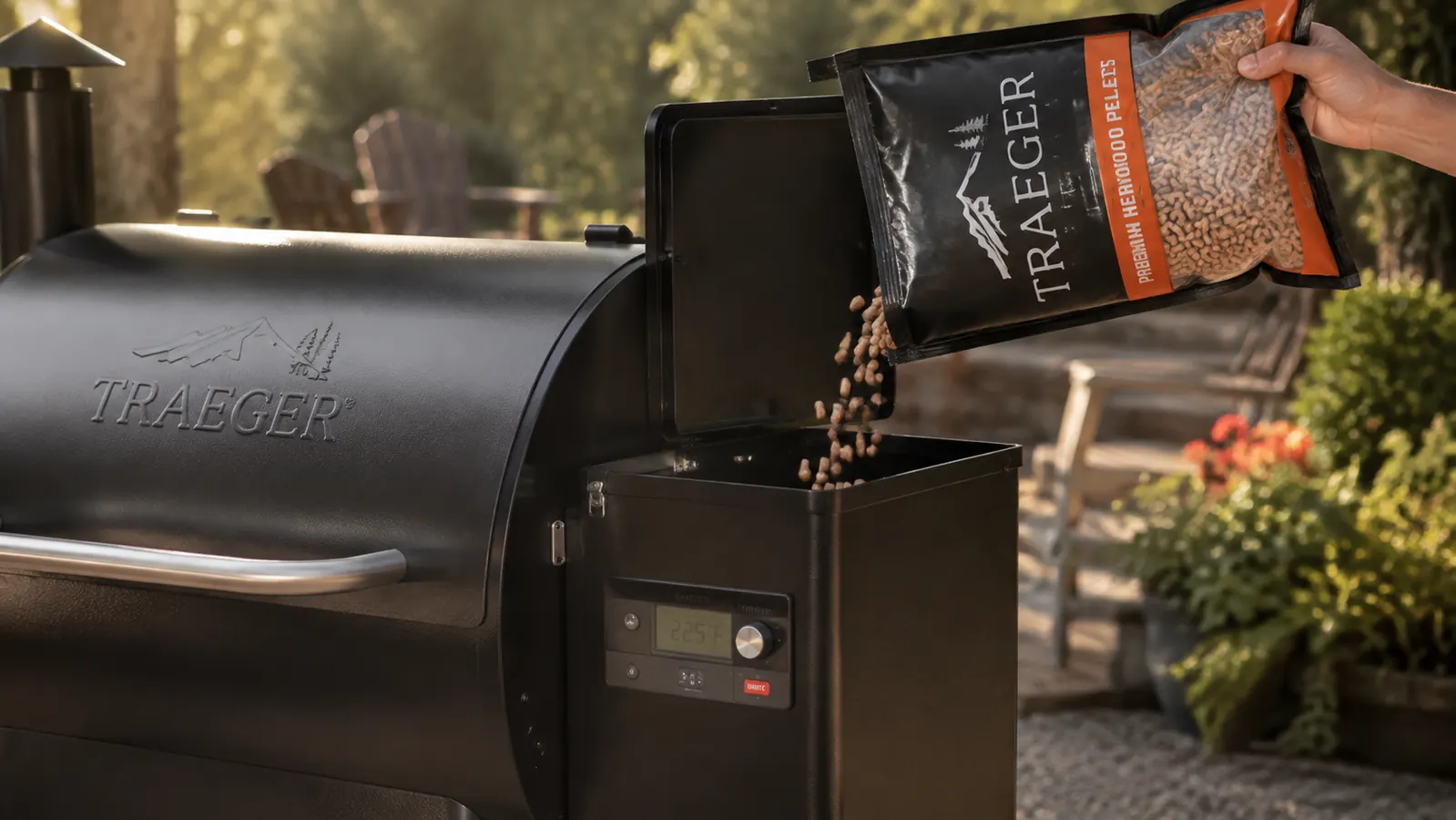
The pellet appetite is the first thing I want to warn you about, because it never shows up in the pretty reviews. A pellet cooker eats fuel on a schedule, and that schedule is steadier than a stick burner but not cheap. A 12 hour brisket at 225 goes through a good share of the 18 pound hopper, and if I crank it to 350 or 400 for chicken it drinks noticeably faster. I learned to keep a spare bag by the back door the way other people keep spare propane. You are buying fuel, not one-time wood. That is a cost, and nobody frames it that way.
It also needs electricity, which sounds obvious until you think about it. There is a power cord that has to reach an outlet, and on a wet weekend I keep the junction covered. If the power blinks mid-cook, the grill has to restart its ignition cycle, which costs you time and a little smoke character. On my covered patio with a dedicated circuit I have never lost a cook to it, but it is a real dependency. A stick burner or a charcoal offset needs nothing but fire. This one needs a wall plug plus fire, and the honest trade is worth stating plainly.
The build quality is where the Pro 22 mostly earns its keep, and I have thrashed it through a full season of weather. The body is a thick enameled steel that has shrugged off a damp spring and a lot of morning dew without rusting on me, which is more than I can say for cheaper grills that flaked in the first year. The legs bolt up solid, the lid seats well, and the hopper lid stays where it belongs even in a stiff wind. It has rolled across my patio, seen a brisket's worth of grease, and handled a move to the back fence without a complaint. For a mid-priced grill it is built like it wants to be around for a while.
The footprint is the other thing to eyeball before you buy. The 22 inch body is the right size for a family patio and still leaves room for a chair and a side table, but it is not small. It stands on locking casters and takes up a real slice of deck, and once it is there you will not be moving it around casually. Pick your spot, run the power cord to it, and leave it. That is the practical trade of a grill with this much grate: it earns its space, but it wants its space.
The Startup and Shutdown Ritual Nobody Tells You About
Lighting a pellet grill is not like lighting charcoal, where you set it and walk away. There is a startup cycle where the auger feeds pellets into the firepot and a hot rod igniter gets them going, and that takes a few minutes before the grill begins to climb to your set point. It is not slow, but it is a ritual, and you learn to factor it into your cooking plan instead of chasing it. I start the Traeger the way I start a boat trailer manifold: a few minutes early, on purpose, so I am not rushing.
The shutdown cycle is the part that really catches people. When you hold the button to turn it off, the Traeger does not just die. It runs a timed shutdown that keeps feeding pellets slowly and running the fan so the firepot burns out clean instead of smoldering into a pile of smoke and ash. That cycle takes around ten minutes, and you cannot skip it and you should not unplug it, or the next start gets ugly. If you are cooking at the tail end of a busy evening and want the grill gone in two minutes, this thing will not cooperate. Ten minutes is the price of a clean shutdown, and I have seen plenty of owners stand there impatient the first time.
Related to that, pellet quality and moisture are not optional niceties, they are the difference between a smooth cook and an auger jam. I keep my pellets in a dry tub, not the open bag, because damp pellets swell and can bind in the auger tube. If a pellet bridges and the auger stops feeding, the grill reads the temp climbing and you get a flash of high heat you did not ask for. I have had it happen once, near the end of a soggy week, and it was a twenty minute digging-out job I would rather have skipped. Dry storage is the whole fix, and it is on you, not the grill.
The shutdown cycle takes about ten minutes and you cannot skip it, and the pellets drink faster the hotter you push it. Nobody puts those two facts on the box, and both matter on a busy weekend.
The Software Is Part of the Deal
The WiFi and the app are the headline feature, and they work, but here is the honest framing: you are buying a grill that is partly software, and software comes with its own small responsibilities. The app tracks your cook curve and the built-in meat probe is genuinely useful for a long overnight, when you can check the flat from the couch or the bedroom and not stand in the rain. That part is real, and it is why this Traeger lands on my patio instead of a cheaper controller.
Getting it paired the first time took me a couple of attempts, and that was the closest I came to being annoyed with the whole ownership experience. The fix was boring, update the app and re-pair close to the grill, but the first-timer who expects it to just work out of the box is in for a small letdown. Once it is connected, the reconnect has been steady every time since, through a brick wall across the house. But the honest note stands: a grill whose controls live in an app is only as pleasant as your latest firmware, and there is a slice of the used-pellet-grill buyer who would rather turn a dial.
One pleasant surprise was how much the pellet choice changes the outcome, which makes the grill more versatile than a one-wood chill box. A straight hickory bag gives brisket and ribs a bold, classic bite, while an oak or a competition blend softens it for poultry and fish. I keep two bags going now, one for red meat and one for chicken, and it is a five second change at the hopper that shifts the whole character of the cook. That latitude is something a single-purpose smoker cannot give you, and it is a big part of why I reach for this Traeger instead of letting it sit.
The controller itself is worth a word too. It is a simple dial with a readout, no menu rabbit hole, and it does exactly what you ask it to. I like that it does not try to do ten things. Set the temp, read the meat probe, occasionally peek at the app graph, and get out of the way. That restraint is rare in gear these days, and it fits the personality of anyone who wants to be shown once and then left alone to work at their own pace.
I also want to be straight about the burn profile, because it is the single most overstated point in the genre. A pellet grill does not smoke like a stick burner. The auger feeds an even, clean burn, so the smoke is gentle and subtle, not the rolling cloud you get off splits. For my family that is a feature, we can actually eat the food and the neighbors stopped complaining. But if your entire reason for a smoker is maximum, get-in-your-clothes smoke, a pellet cooker is the wrong tool, and no amount of pellet hype changes that physics. Know it before the box arrives and you will not be disappointed later.
What It Wants From You at the End of a Cook
The daily tidy is genuinely easy, which is a point in its favor. The grease bucket on the side catches most of the drippings, and I scrape the drip pan with a bench scraper while it is still warm. After a brisket, the whole thing rounds out in about ten minutes, and none of it involves a shovel or an ash pit full of embers. Compared to the offset I used to babysit, this Traeger is practically self-cleaning, and that ease is a big part of why it stays in the rotation.
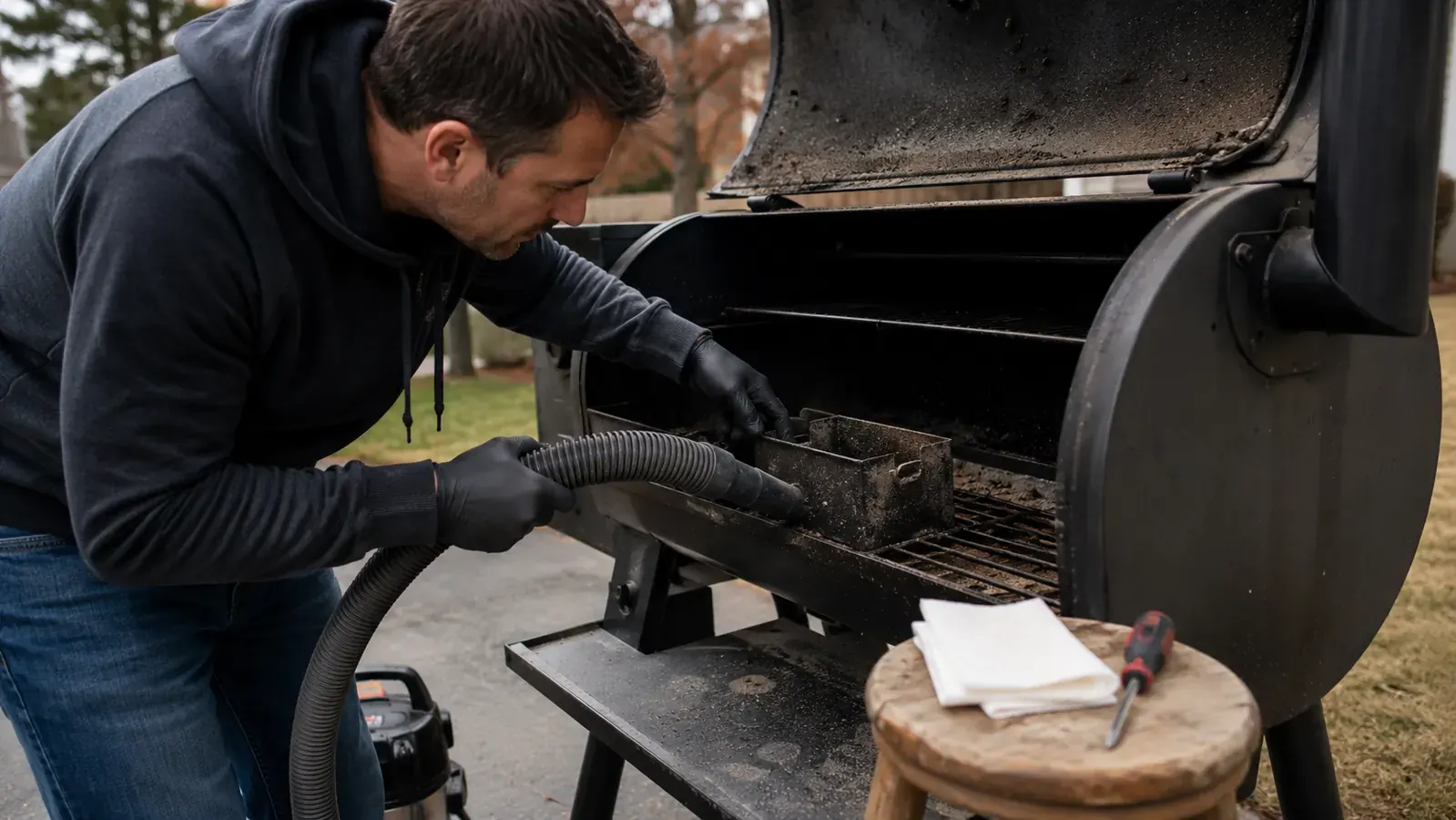
The deeper clean is the honest catch. Every five or six cooks the firepot fills with ash, and ash is the one thing that will quietly ruin a pellet cook if you let it pile up. The Pro 22 has a removable firepot that lifts out for a quick shop vac pass, and there is a cleanout rod for the auger tube. It is a twenty minute job, and it is genuinely doable, but it is a real job with a real schedule. The reviews that tell you pellet grills are maintenance free are selling you a dream. They are easier to clean than an offset, not immune to cleaning.
Two more honest limits, quickly. First, the Pro 22 tops out around 450 degrees, which is plenty to char chicken or sear a couple steaks, but it is not a screaming hot grilling machine. I still light charcoal when I want a hard crust. It is a smoker with a grill mode, not the other way around. Second, it runs on a single meat probe, so if you want to track two locations in one cook, a shoulder and a brisket, you are adding a second probe or a lot of patience. Neither is a reason to skip it. Both are worth knowing.
What I Liked
- Rock-steady temperature that turns an overnight brisket into set and sleep
- WiFi and the built-in meat probe let me check the cook from the couch or the boat
- Ten minute daily tidy and a grease bucket instead of an ash pit
- 572 square inches of real grate for a family and the neighbors
- Once it is paired, the reconnect has been flawless, no drama cook after cook
Where It Falls Short
- Eats pellets faster the hotter you push it; fuel is a real ongoing cost
- Needs a wall outlet and takes about ten minutes of shutdown you cannot skip
- First WiFi pairing took a couple of tries, the most frustrating minute of ownership
- Smoke is gentle and clean, not the rolling cloud of a stick burner
- Single meat probe, so tracking two pieces of meat in one cook gets complicated
Who This Is For
The Traeger Pro 22 is for the cook who wants good smoked meat but has a life that does not stop for a firebox. If you want a brisket that slices, a pork shoulder that pulls, and the ability to sleep through the night and still get your morning run in, this is built for you. It is also the right first smoker for someone who has watched offset videos, felt the intimidation of fire management, and wants a machine that removes the fear without removing the smoke. Traeger shows you the first fire once, and after that it leaves you alone to work at your own pace, which is the right way for a tool to treat you.
It also suits the person who is honest about their own relationship with gear. If you are happy to learn the startup and shutdown cycles, keep a dry bag of pellets by the door, and spend twenty minutes with a shop vac every few cooks, the Pro 22 rewards that small effort with consistent, dependable results. It is not a toy and it is not a diva. It is a workhorse that wants a little routine in exchange for a lot of reliability.
Who Should Skip It
Skip it if your whole reason for smoking is maximum aggressive smoke flavor, because a pellet cooker cannot deliver the rolling cloud of a stick burner, full stop. Skip it if you need a true high-heat grilling machine, because 450 is a sear helper, not a grill beast. Skip it if you have no outdoor outlet and no tolerance for a power cord, since this grill needs a wall plug to run. And skip it if the idea of a shutdown cycle you cannot rush, an app you occasionally have to babysit, and a firepot you have to vacuum drives you up the wall; you want a simpler machine, not a smarter one.
For everyone else, this Traeger is an honest, dependable upgrade that makes weekend smoke days about the food again instead of the fire. I would buy it again today, and the list above is not to talk you out of it. It is so you buy it with your eyes open and then never have a bad surprise about it. That, more than any ten star rating, is what makes a tool worth keeping.
A full season and one honest list later, I would still buy it again
The Pro 22 is not perfect, and my list above tells you exactly where it is not. But for a dependable weekend smoker, it earns the patio space. See the current price and the full spec sheet on Amazon and decide with both eyes open.
Amazon Check Today's Price on Amazon →