
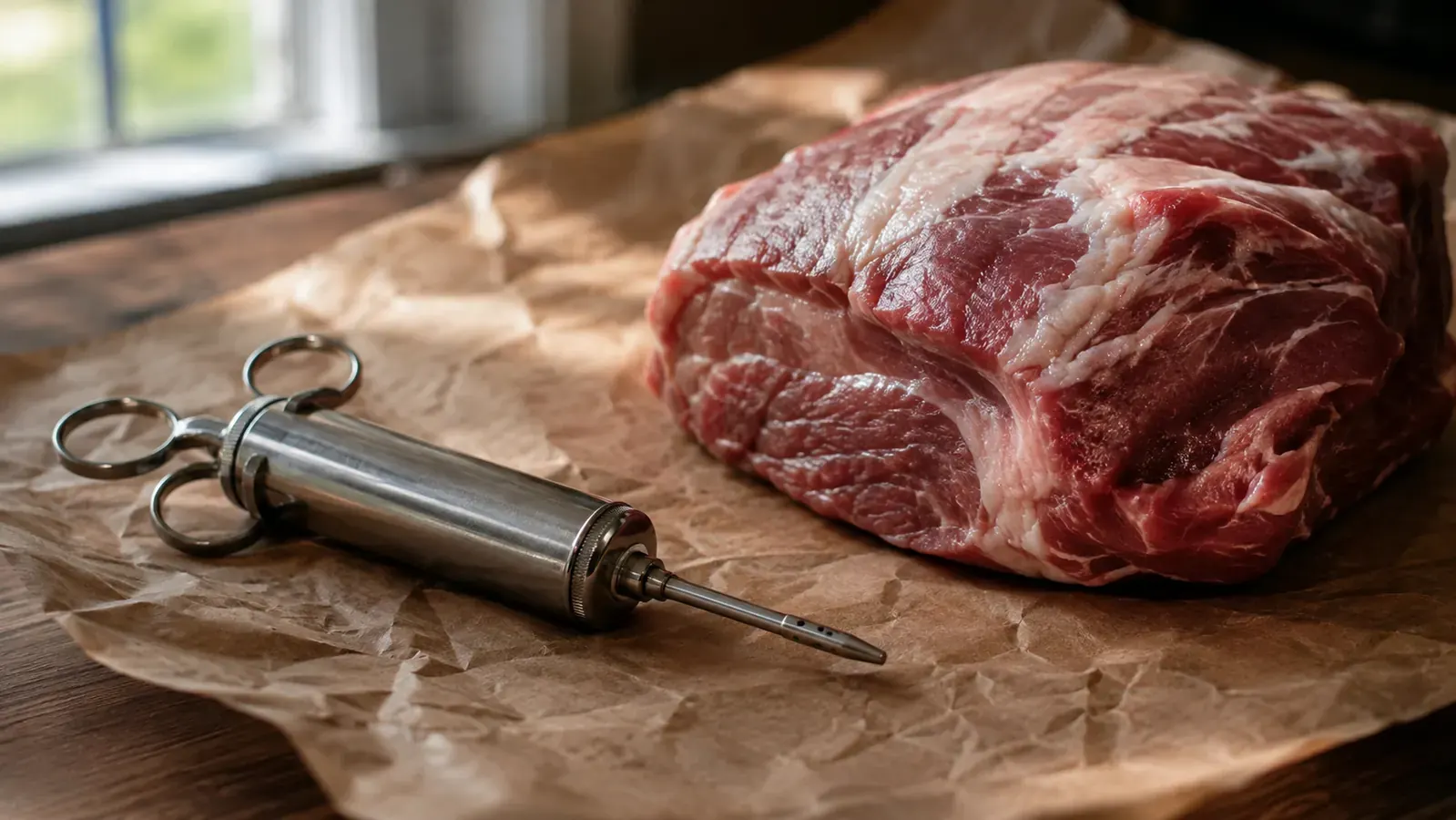
I have dried out more birds and shoulders than I care to count, and for years I told myself an injector was for people who could not be trusted with a thermometer. The prestuffed turkeys had burned me on needles that bent, plungers that stuck, and marinade that sprayed halfway across a cold kitchen. So when a neighbor handed me an Ofargo meat injector after our first cookout of the season, I nearly put it in the drawer with every other gadget I never use. I am glad I did not, but I also want to be straight with you from the top: it is not a magic wand, and the stuff that makes people give up on injectors is still sitting right there in the box when you open it.
What you are reading is not a love letter. I have used this thing on a Memorial Day pork shoulder, a smoked turkey for the Fourth, two briskets, a dozen chickens, and a leg of lamb my son-in-law was too nervous to cook himself. Seven months of real use, not a weekend of it. Here is what I actually like, what I have to work around, who I would hand one to, and who should keep their money in their pocket and stick with a good rub.
The Quick Verdict
A solid, well-made 2-ounce stainless injector that gets real flavor and moisture deep into a big cut, provided you strain your marinade and clean it right after every single cook.
Amazon Check Today's Price →The kitchen-tested injector that finally earns its drawer space
If you smoke big lean cuts and want the meat to taste seasoned all the way through, not just on the first quarter inch, this is the injector I would reach for. See the current price on Amazon.
Amazon Check Today's Price on Amazon →How I've Used It These Last Seven Months
Everything I say here is from my own pit, my own hands, my own kitchen sink. I am a 58-year-old weekend pitmaster who runs a 22-inch drum smoker and a kettle, and I cook for family and neighbors more than I cook for strangers. I did not time myself with a stopwatch on cleaning day one, but by the third or fourth cook I had a rhythm, and that rhythm is exactly where the honest part of this review lives.
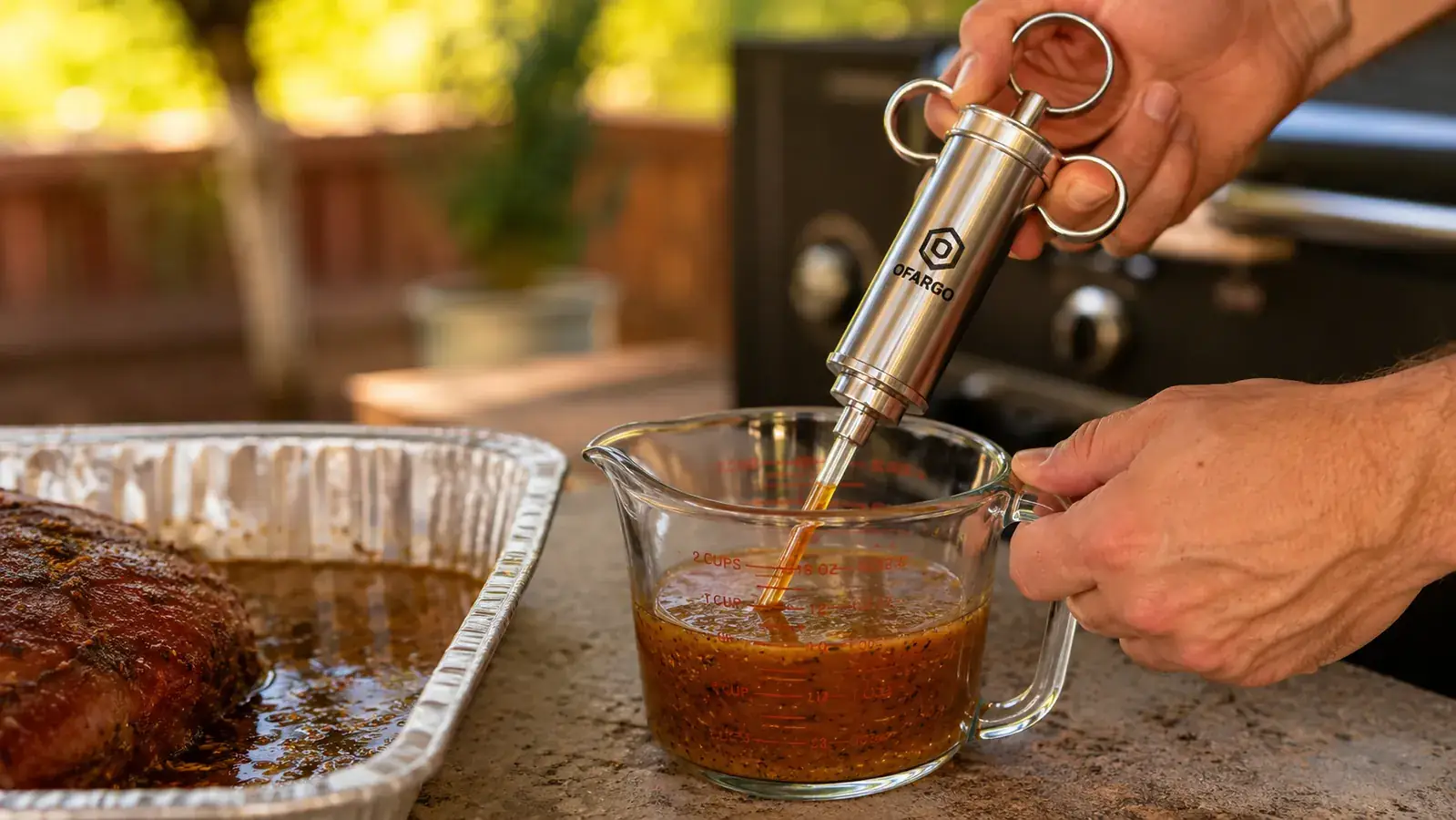
The Ofargo is a stainless syringe with a 2-ounce barrel and four needles: I have mostly used the big bold needle for pork shoulder and the finer one for poultry, and I have never reached for the curved or the multi-hole when the straight two did the job. I mix my injection with melted butter, chicken broth, salt, pepper, and a splash of apple cider vinegar, and I have learned to strain every batch through a fine mesh sieve before it goes near the barrel. That detail matters more than any other thing I can tell you, and I will come back to it.
For a 14-pound turkey I will do about a full 2-ounce load in each breast and a lighter pass in each thigh. For a pork shoulder I inject every couple of inches, pull the needle out slow, and push the plunger the whole way out as I withdraw so I am not leaving a pocket of liquid that pools instead of distributing. That last move, pushing as you pull, is the whole trick, and you cannot learn it from the box. It is the difference between a shoulder that tastes seasoned an inch deep and one with one salty spot per hole.
What Nobody Tells You Before You Buy One
Here is the part the glossy product shots skip. An injector is not set-and-forget. The moment you pour a marinade with garlic, herbs, or lemon zest into that barrel, you are on the clock, because those little solids are exactly what will clog the needle and leave you standing over a raw brisket with a jammed plunger and a rising temper.
The Ofargo comes with a small cleaning brush, and I want to be honest that I did not think much of it at first. A cheap wire brush and a couple of pipe-cleaner sized tools seemed beneath the rest of the kit. Then, on cook three, I got a garlic clove stuck in the finest needle and spent ten minutes flushing hot water through it before I learned to basically never send unstrained liquid down that fine needle at all. Once I stopped being stubborn and started sieving, the clogged-needle problem basically disappeared, and the cleaning brush does a fine job on the barrel between the ribs once you quit rushing.
The other thing nobody mentions is that cleaning is not a five-second rinse. You have to disassemble it every single time, flush the inside, run the brush through the barrel, and push water through each needle until it runs clear. If you are the kind of cook who likes to stack the dishes and walk away, this tool will punish you with sticky residue inside the barrel that you will find the hard way next cook. I am a leave-nothing-for-tomorrow guy at the pit, so it fits me. I would not hand this to someone who does not like cleaning a french press.
Where It Shines: Big Lean Cuts That Need Help
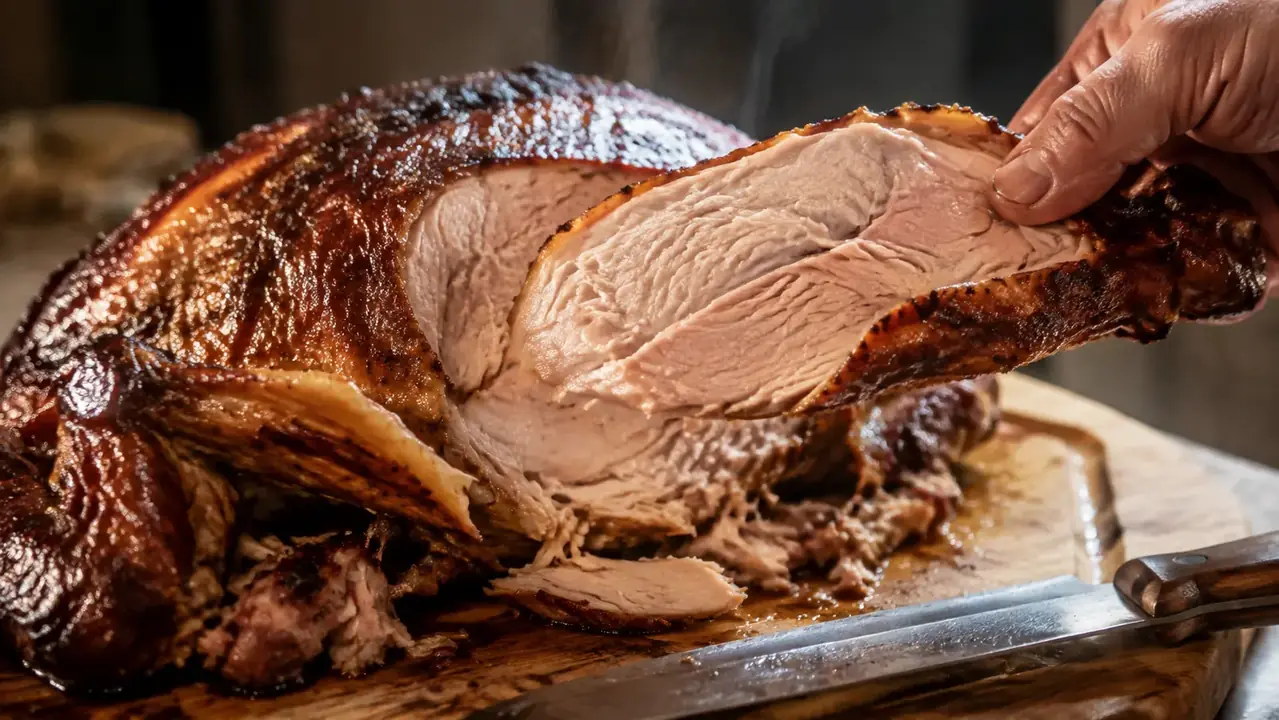
A turkey breast is the clearest win. You can brine for three days and still get that dry, chalky bite in the thickest part, because salt only travels so far and so fast. Injecting a butter-broth-salt mix straight into the muscle changes the eating entirely. My last smoked turkey came off the drum at 158 in the breast, rested under foil, and the white meat sliced like it had been wet cured. My sister-in-law asked what I had done different, and that is the moment the injector stopped being a gadget and became a tool.
Pork shoulder is the other one, and honestly the one I enjoy most. A shoulder does not need moisture the way a turkey does, but injection gets seasoning deep so you stop needing a heavy bark to carry all the flavor. With a simple salt-butter-broth injection and a light mustard slather of rub, I have pulled shoulders that taste seasoned through the center instead of just at the crust. That is the real pitch of this thing, and it is a good one.
For brisket I am more of a light-hands guy. I will inject the flat lightly and leave the point alone, because on a long cook you are trading one texture problem for another if you overdo the liquid in the thick muscle. The Ofargo is made for the job and the big needle goes in clean, but I want to be honest that my brisket results had a lot more to do with temperature and rest than with the injector. I would buy this tool for turkey and shoulder first, and treat brisket as a bonus.
Build, Comfort, and the Little Things
The stainless barrel feels solid in the hand, and the markings for ounces and milliliters are printed on the side, which I actually use. The plunger moves smoothly when the liquid is strained, and the rubber seal has held up through a couple of dozen cleanings without getting sticky or swelling. For the price you are paying, the fit and finish is honestly better than I expected from an import gadget, and the fact that it came with four different needles plus a paper manual and an e-book of recipes tells you the brand knows how people actually use these.
Ergonomics are fine but not perfect. The barrel is 2 ounces, which sounds small until you realize you are refilling it constantly on a big shoulder. I found myself wishing for a slightly larger barrel on the big cuts so I was not standing there loading it eight times. It is not a dealbreaker, and the smaller barrel actually gives you more control on poultry, so I would call it a balance rather than a flaw. But if your whole world is 12-hour brisket flats, a bigger-capacity injector might serve you better.
Alternatives I Considered Along the Way
I compared this directly against the Bayou Classic, which is the other stainless injector every pit forum brings up, and it comes down to needle selection and gift-kit completeness. The Bayou is a fine, no-nonsense tool and a little cheaper, but it ships with a narrower set of needles and less in the box. The Ofargo's four needles and the recipe book nudged it ahead for me, because I am the kind of person who uses the tool and the recipes and would rather have the option than save a couple of bucks.
I also looked at the cheap plastic injectors, and I will simply tell you not to bother. A plastic barrel flexes, the seal goes stiff, and you cannot get them clean enough to trust with meat that is going to sit in a cooler for hours. If you are going to inject at all, spend the small amount of extra money once and buy stainless. That is not hype, it is just the difference between a tool that lasts and a disposable that leaks butter onto your cutting board.
The Kit, Taken Apart
Pull the Ofargo out of the box and you get the stainless barrel and plunger, four needles, a small cleaning brush, a rigid paper manual, and a card pointing at a downloadable e-book of recipes. The needles are the part worth talking about, because the number four looks like a gimmick until you actually reach for them. There is the big bold needle for pork and brisket, a finer one for poultry, a curved one for getting around a bone, and a multi-hole needle that fanned the liquid out when I wanted shallow coverage on a thick chicken breast. I use the bold and the fine ninety percent of the time, but having the other two in the kit has bailed me out more than once.
The volume marks on the side are a small thing that matters more than you would think. When a recipe says to go two ounces into the breast of a turkey, I can see exactly where I am instead of counting pumps and hoping. It is the kind of design detail that tells you the manufacturer has actually stood at a cutting board with a bird in front of them. Nothing about the construction feels flimsy, the plunger seal has not swelled or started sticking after months of hot water and soap, and there is no cheap seam where the needle meets the barrel that would trap old marinade.
My Cleaning Routine, Since Everyone Asks
I am going to give you the honest routine because it is the single biggest reason people abandon injectors, and it is not really the tool’s fault. When the cook is done I take the whole thing apart at the sink before anything cools and hardens. I pull the needles off, push the plunger out, and run hot water through the barrel and down each needle until it runs clear. Then the little brush goes through the barrel a couple of passes, and I set every piece on a rack to dry so no water hides in the needle hub and rusts anything. Three to four minutes, done every single time, no shortcuts.
If I am being fully honest, the supplied brush is the weak link in the whole kit. It does the job, but the bristles are soft and I suspect after a year of hard daily use it will wear out. Any cheap wire pipe cleaner from the hardware store works fine as a replacement, so this is a minor annoyance, not a reason to skip the product. The thing to remember is that the cleaning burden is real and it is the price of admission. If that does not sound like you, take the honest advice in the section below and save your money.
What I Liked
- Solid stainless build that actually gets clean and stays clean
- Four needles cover poultry, big cuts, and shallow work
- Real, repeatable moisture gain on turkey and pork shoulder
- The recipe e-book and paper manual are genuinely useful for a first-time injector user
- Comfortable in the hand with clear volume markings on the barrel
Where It Falls Short
- Fine needle will clog on anything unstrained; you must sieve your marinade
- Cleaning is a full 3 to 4 minute disassemble every single time
- The little cleaning brush is on the cheap side and not built for years
- 2-ounce barrel means a lot of refills on a big shoulder
- Brisket flats give a modest return unless you already have temperature dialed in
The moment my sister-in-law asked what I did different to the turkey was the moment this stopped being a drawer gadget and became a tool. Straining the marinade was the price of admission, and it was worth it.
Who This Is For
This is for the cook who already has a decent thermometer, who has smoked a few turkeys or shoulders and is tired of the dry quarter inch, and who is willing to spend three honest minutes cleaning a tool after the cook. If that describes you, the Ofargo will improve your results on poultry and shoulder in a way that is easy to notice at the table. It is also a genuinely good gift for a dad or husband who already runs a smoker, and the kit packaging is nicer than the price suggests.
Who Should Skip It
If you are the kind of cook who has not touched a meat thermometer, this is not your first purchase. Fix temperature and rest before you add an injector, or you will be injecting seasoning into a brisket that was overcooked anyway and blaming the wrong tool. If you hate cleaning gadgets with crevices, the daily disassemble will defeat you within a month. And if you only ever cook burgers and steaks that are inches thick, you simply do not need an injector; a rub or a marinade in a bag does the job for less money and zero cleanup. Skip it for those people honestly.
Bottom line: buy it for turkey and shoulder, keep the strainer handy
The Ofargo is the injector I reach for after seven months of real cooks, warts and all. If you smoke big lean cuts and are ready to spend two minutes sieving and three minutes cleaning, this is a tool that pays for itself in one holiday dinner. Check today's price on Amazon.
Amazon Check Today's Price on Amazon →