
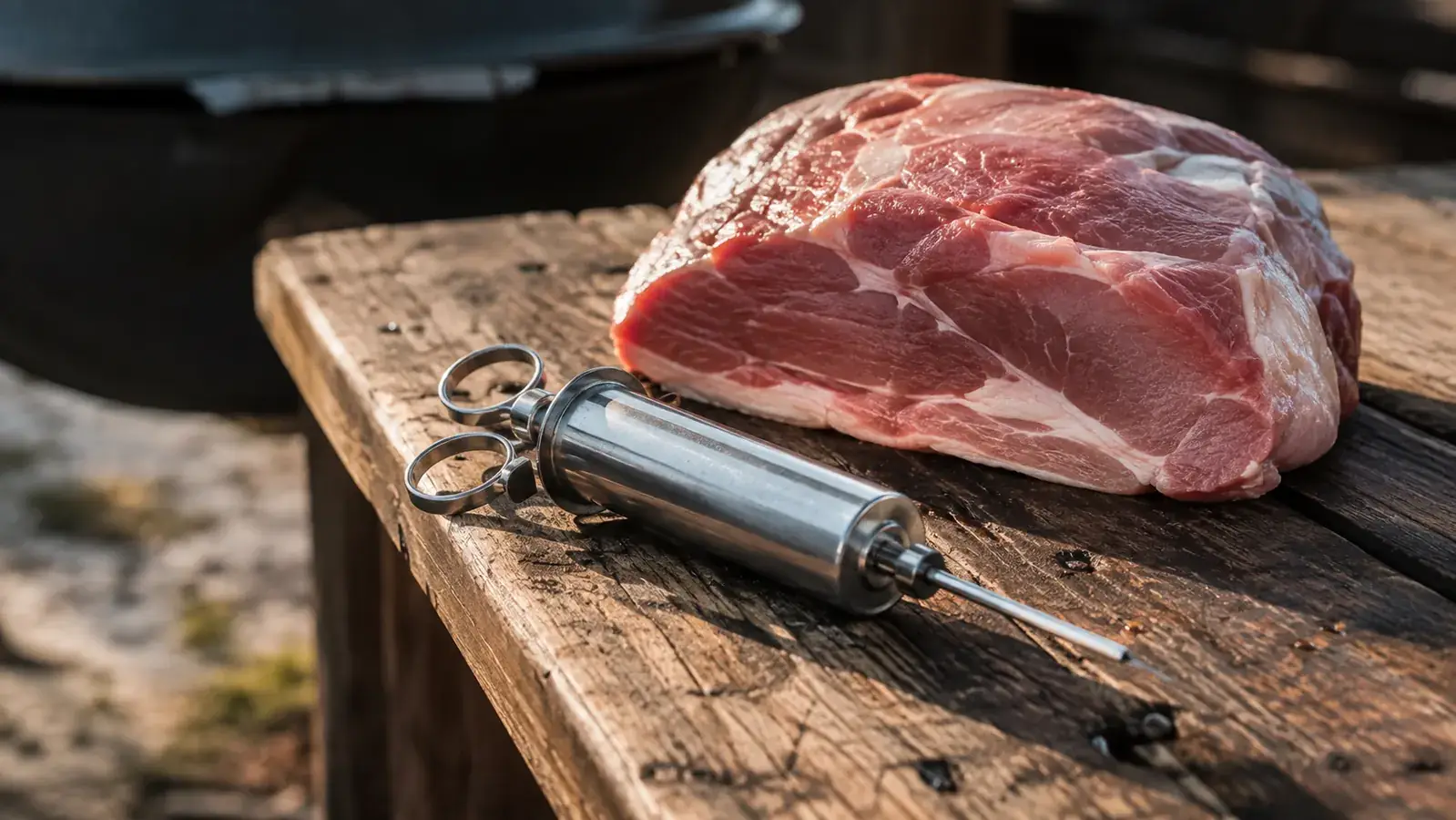
I cooked dry turkey for eighteen years and just figured that was the price of a white meat bird. Then I dried out a pork loin that cost me more than the neighbor's sympathy was worth, and I got honest about the problem. It was never the cook. It was that the seasoning and juice stopped at the surface. Brining helped a little, rubbing a little more, but neither one got a lick of moisture to the center where it mattered. I picked up the Ofargo meat injector a little over seven months ago after a buddy showed me his setup before a comp, and it solved a problem I did not know I was having.
I have run it through a whole season since: three pork butts for pulled pork, two briskets, a couple of whole chickens, a big fresh ham, and the Thanksgiving turkey. I want to tell you what held up, what clogged, and where I would spend my money again, because a good injector earns its keep and a bad one just fights you all afternoon.
The Quick Verdict
A genuinely solid two-ounce stainless injector that gets marinade to the center of a big cut, with four needles and easy cleanup. Knocking off a half star only because the thin needle wants to clog with anything seeded or heavily herbed, which you learn to work around in a cook or two.
Amazon Check Today's Price →If You've Given Up on Dry Turkey, the Fix Is Straightforward
The same two-ounce Ofargo injector I ran through a full season is one simple tool that gets brine and butter straight into the meat. If you are tired of slicing into a dry bird, this is where I would start.
Amazon Check Today's Price on Amazon →How I've Used It
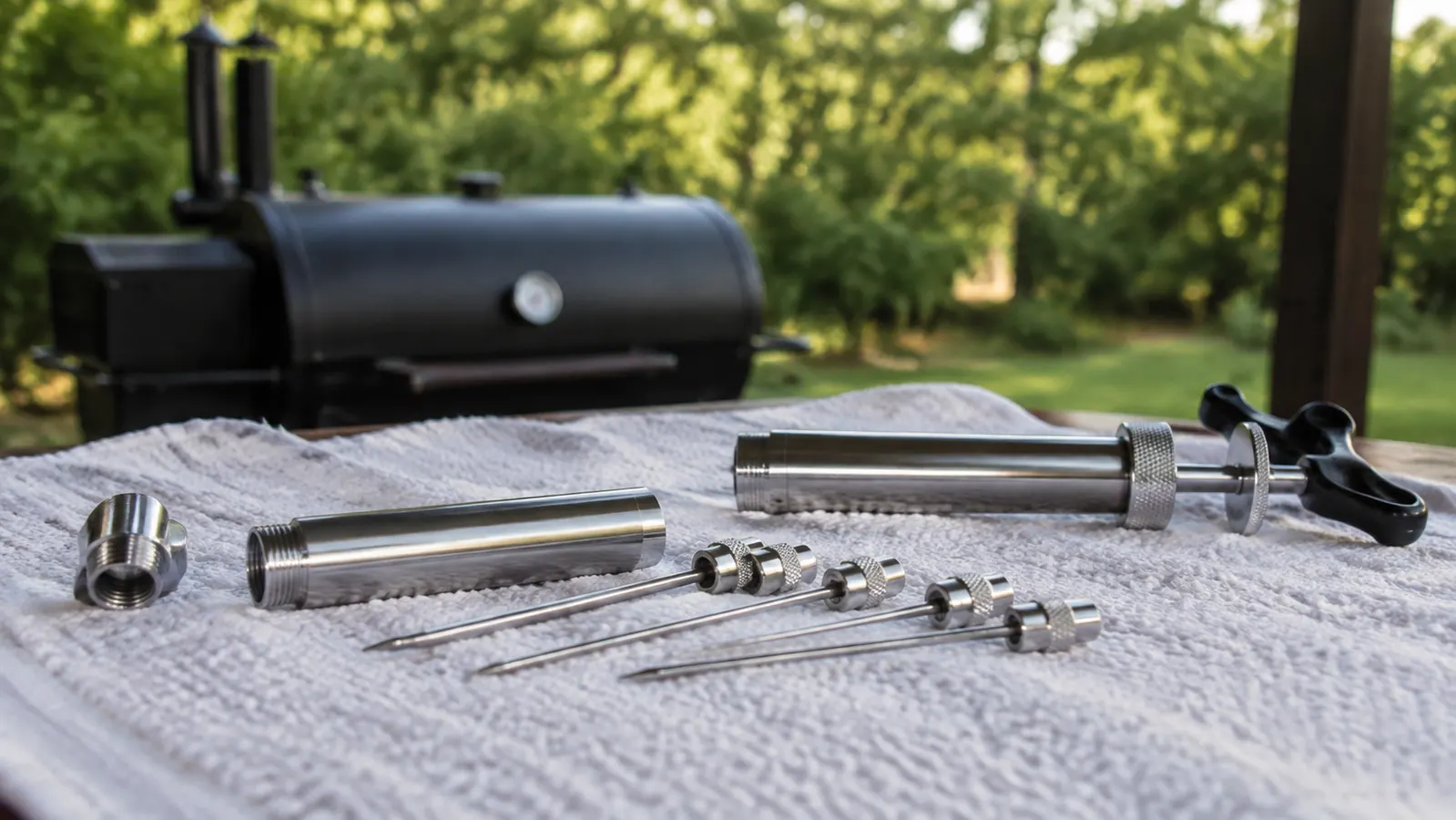
Let me be plain about what this thing is. It is a stainless steel syringe with a two-ounce barrel, a spring-loaded plunger, and four different needles that screw on and off. The biggest needle is what I use for the thick stuff, a coarse injection that has butter and minced garlic in it. My injects like that will slide right through even a fat quarter of ham. The fine needle is for a thin brine mix and for poultry, and that is the one I want on the turkey. The kit also ships with the wider needles for things like whole chickens where you want more volume in one push.
The barrel is marked with ounces on the side, which sounds like nothing until you are trying to hit a set amount on a big brisket and you do not want to eyeball it. The plunger is spring loaded, so when you let go it draws the liquid up the needle and fills the barrel by itself. You set the needle into the meat, push down, and the spring pushes the shot in as you withdraw. That pull-and-push rhythm took me about one cook to get comfortable with. The first time I fought it. By the second butt I was injecting a whole shoulder in under two minutes without thinking about it.
What It Actually Does to the Meat
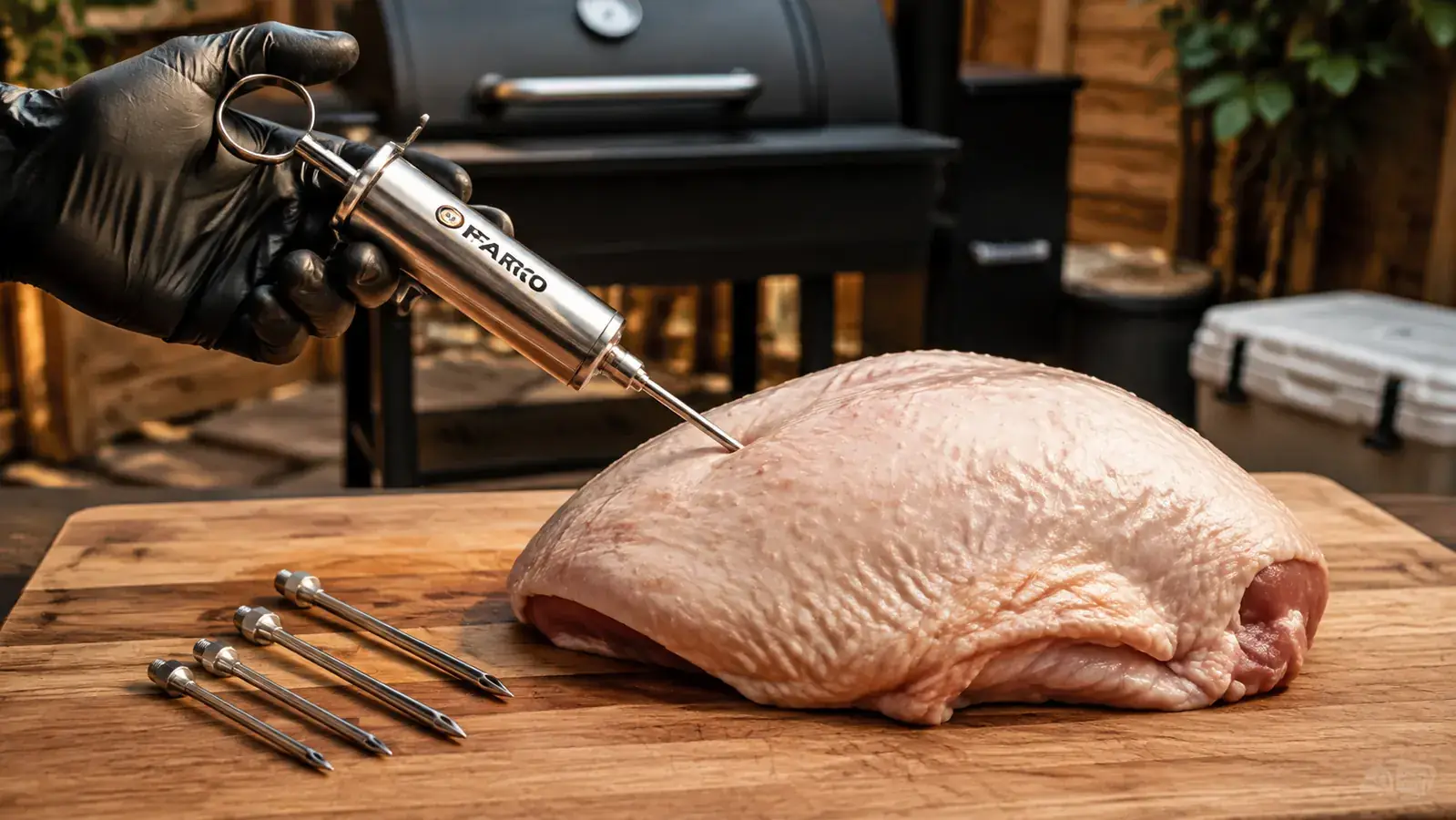
Here is the honest part, and it is the reason I would not smoke big lean cuts without one anymore. Injection is the only way to get flavor and moisture into the center of a cut that is an inch or more of solid muscle. A rub seasons the outside and it stays pretty much outside. A brine has to wick all the way in over hours. Injection puts a butter-and-broth shot right at the core, and then the long cook drives that moisture back out toward the surface instead of drying the center out.
I call bull on anyone who tells you an injector is a crutch for bad cooks. It is a technique, and it does not fix a butcher's error or a fire you cannot hold. What it does is take a normally dry protein and make it behave. On my Turkey Day bird I injected a mix of melted butter, chicken broth, and a little lemon into the breast at roughly an eighth to a quarter of a shot per two-inch spacing, then let it rest forty minutes in the fridge before it hit the smoker. That bird came off at 161 in the breast and carved juicy right down to the last slice. Nineteen years of dry birds ended because of a two-ounce shot of butter.
The same logic runs on a pork shoulder. I inject a pork butt with a warm apple-juice and cider-vinegar mix before a sixteen hour smoke, and the finished pull is noticeably more moist on the inside than the same cut cooked dry. Is it the only variable? No. But I have run side by side enough to know the injected one wins, every time, and it is not close.
Nineteen years of dry turkey ended because of a two-ounce shot of warm butter and broth the Ofargo put right into the breast.
Build Quality and the Four Needles
The whole thing is stainless, and after seven months of weekly use, weekly dishwashing, and getting dropped in a sink more than once, I have not seen a rust spot or a seized thread. The needles screw on with a tight, clean fit and I have never had one work its way loose mid-injection. The barrel threads where the needle meets the body stay sealed even when I am pushing a thick butter mix, which is the test that breaks cheap injectors. I had a plastic one before this and it dripped marinade all over the cutting board every single cook.
The spring-loaded plunger is the part I underestimated. It means a steady, even push rather than me trying to hold pressure by hand, which gave me shakes and uneven shots on my old one. With the Ofargo I get the same dose every time I pull the trigger. The ounce markings on the barrel stay readable even when the syringe is wet, and after seven months they have not worn off.
One honest knock on the needles. The thin one will clog if you run anything with minced herbs, seeds, or zest through it. A fine strain on your injection mix mostly solves it, but it is a real thing you learn about rather than a flaw you never meet. The wide needle handles coarse mixes without issue. It is not a deal breaker, but you should know to set aside the thin needle for clean, thin brines.
Cleaning, Which Is Where Cheap Injectors Fall Apart
The reason most people give up on injectors is the cleanup, and the Ofargo is genuinely better here because it comes apart completely. The plunger pulls out, the needles unscrew, and every piece is stainless and dishwasher safe. I usually hand wash mine right after a cook because butter sets up fast, but if I am lazy and let it sit, a soak in warm soapy water for ten minutes and a poke through the needles with the included cleaning wire has it spotless.
Truthfully, the cleaning wire is the piece that tells you a company thought about how people actually use the thing. The wide needles are easy to rinse. It is the thin one that wants a wire down the bore to clear a bit of cooked-on mix. I keep the wire on a magnet strip by the sink so I do not lose it, and I have not had a clog that the soak-and-wire did not clear in about two minutes. If you clean it right after you use it, the whole job is under five minutes.
Performance Over the Full Season
Over seven months the Ofargo has stayed consistent. The plunger spring still springs, the threads still seat tight, and the ounce marks still read true. I have not had to replace a single needle, and I have run them all hard. The six-inch needles reach to the center of even a big brisket flat, which is the depth you actually need. I have never had a needle bend, and I am not gentle with them.
Durability is where a cheap tool breaks you. I have broken two plastic injectors in the past, both at the thread where the needle meets the barrel, usually within the first three months. The Ofargo has taken worse abuse and just keeps going. After a full season I expect to get many more years out of it, and for a tool that costs less than a single pork butt, that is the value argument that wins.
Where It Falls Short
I am not going to tell you it is perfect, because it is not. The thin needle needs a clean, strained mix or it will clog, and that is the one genuine annoyance I hit. The accompanying recipe book is fine but it is not the reason to buy. And if you are a first-timer, there is a small learning curve to the pull-and-push rhythm, though it sorted itself out inside a single cook. None of these are reasons to look elsewhere. They are just the honest edges of a good tool.
What I Liked
- Stainless construction that has not rusted or seized in seven months of weekly use
- Two-ounce barrel with clear markings and a spring-loaded plunger for even, repeatable shots
- Four needles cover everything from fine turkey brine to coarse butter-and-garlic mixes
- Full disassembly and stainless steel make cleanup genuinely easy, with a clearing wire for the thin needle
- A spread of replacement needles in the kit means nothing to source early
Where It Falls Short
- The thin needle clogs with anything seeded, herbed, or zested unless the mix is strained
- The included recipe book is thin and not the reason to buy
- First-timers spend a cook or two finding the pull-and-push rhythm
A Real Week With It
To give you a sense of how this slots into a normal weekend, here is a typical one for me. Friday night I trimmed a large pork shoulder, mixed a half cup of warm apple juice with a quarter cup of cider vinegar and a tablespoon of dark brown sugar, strained it, and injected the shoulder with the wide needle at one-inch spacing. It took maybe four minutes, then the shoulder rested in a foil pan overnight. Saturday morning it went on the smoker at 250 and I left it alone for the bulk of the day. When I pulled it that evening at an internal temp near 203, the center was moist all the way through in a way it never was before I owned an injector.
That is the actual value of the Ofargo to me: it is not a showpiece. It is a dull, dependable tool that takes four minutes of my time before a cook and returns a noticeably better result every single time. There is no drama, no learning the temperature probe, no fiddly app. You mix, you pull, you push, you clean it in five minutes, and it goes back on the magnet. That simplicity is exactly what I want out of a pit tool.
How It Compares to Other Injectors
I have owned a couple of these over the years, so I can tell you how the Ofargo sits against them honestly. My old plastic injector was cheap to buy but it dripped, leaked at the threads, and gave out within a few months. A pricier brand-name stainless injector I borrowed from that same comp buddy shot even and cleaned fine, but it cost two or three times as much and offered the same two-ounce capacity. The Ofargo lands in the middle: it performs like the expensive stainless one, at a price closer to the cheap plastic one, with the added give of four needles instead of two. For a tool this simple, that is the right place to sit.
Is it the fanciest injector you can buy? No. Does it need to be? Not for weekend smoking. The things that matter, a sealed stainless body, clean threads, a spring that keeps tension, and needles that reach the center, are all there and all holding up after seven months. That is what I look for in any pit tool, and it is what this one delivers cook after cook.
It will not rescue an overcooked center. Used honestly, as one sharp tool among several, it pays for itself in a single juicy bird.
Who This Is For
This is for the backyard cook who is tired of slicing into dry white meat and pretending it is fine. If you smoke turkey, pork loin, chicken breast, or a fresh ham, and you want the flavor to actually reach the center, this is the tool. It is also for anyone who is tired of buying a new plastic injector every season when the threads give out. A stainless injector that comes apart and cleans easy, for less than the price of a good pork butt, is the kind of upgrade you buy once and stop thinking about.
Who Should Skip It
If you mostly cook fatty cuts that thrive on a long smoke, like a brisket point or a well-marbled rib eye, you may not find much to inject. And if you are not willing to clean a tool immediately after a cook, no injector will feel like a win, because a dry gummed-up syringe is miserable on the next use. If that sounds like you, a good wet rub and a reliable thermometer will get you most of the way without adding a cleaning step.
I would also tell anyone who expects this to fix a pulling fire or a shredded piece of meat to reset expectations. Injection is one technique in a longer cook. It will not rescue an overcooked center, and I have never pretended otherwise. Used honestly, as one sharp tool among several, it pays for itself in a single juicy turkey.
Nineteen Years of Dry Birds Is Long Enough
The same Ofargo injector I ran through a full season of butts, briskets, and holiday turkeys is a small, honest fix for the dry-meat problem. If you are ready to stop apologizing for white meat, this is where I would put my money.
Amazon Check Today's Price on Amazon →