
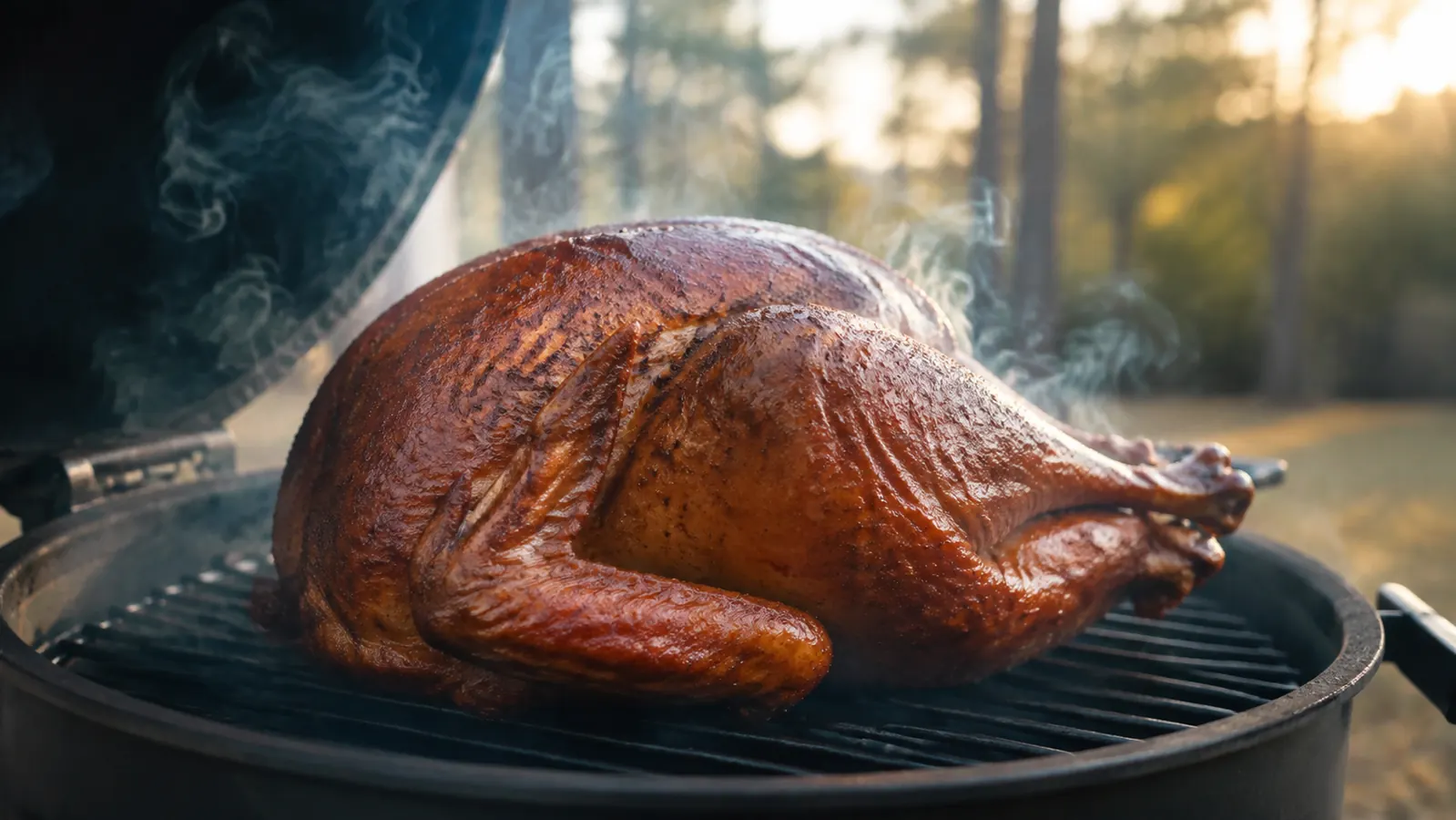
Every turkey season I watched the same sad math play out. A sixteen pound bird goes on the smoker, the breast hits 165 and dries out while the dark meat is still climbing, and the good white slices everyone asks for come off chalky. I tried the cures that get passed around. I brined for two days, I rubbed butter up under the skin, I stood over the pit basting with the lid open every half hour and watched my heat bleed out. Every one of those attacks the problem from the outside. And the outside of a turkey breast is not where the dry comes from. The dry starts inside, and there is exactly one honest way to fix it from inside: you inject it.
That is where a simple tool earns its keep. I have smoked enough turkeys now to keep two injectors on the shelf, and the one I reach for first is my Ofargo stainless steel kit. Two ounces of capacity, four stainless needles so I can pick the one that suits the job, and it breaks all the way down so I can scrub it clean without fighting it. This guide walks the whole thing start to finish, the way I do it on my own pit: bird thawed, injection made so it flows, straight into the thickest meat, seasoned, and smoked to a done breast instead of a dried one. Show me once and I am set, so here it is once.
Fix the Dry From the Inside This Season
You cannot fix what happens inside a turkey breast by standing at the lid and basting. The Ofargo stainless injector is the tool I load before every bird, and it breaks down for a clean I actually want to do after dinner.
Amazon Check Today's Price on Amazon →Step 1: Start Thawed and Dry, Never Cold Straight From the Fridge
A turkey does not take an injection well when it is cold. Thaw it in the fridge, which for a sixteen pound bird means a good two to three days, until there is no ice left in the cavity and the legs move freely at the joint. A half-frozen bird cooks uneven once it hits the smoker, and a stiff, cold breast fights the needle and spits your liquid back at you. Warm it up, and the meat opens up and takes what you give it.
Once it is thawed, pull the giblets and neck out of the cavity and pat the whole bird dry with paper towels, inside and out. Dry skin is what gets you crisp skin later, so do not skip this and do not get impatient with it. I take the bird out of the fridge about an hour before I plan to inject, so it is not fridge-cold when the needle goes in. If the weather is hot, keep it to an hour, you are not trying to leave raw poultry sitting out all afternoon.
While the bird warms, set up your station. I lay a big cutting board with a slight lip, or a sheet tray, because injection liquid always manages to wander. Tuck the wing tips behind the bird so they do not flop into the way, and leave the legs as they are. You are not looking to truss it for the smoker, you want access to the meatiest parts of the breast and thigh without the bird sliding around on you.
Step 2: Make an Injection That Actually Flows Through the Needle
The whole trick is that your injection has to stay liquid. My everyday bird mix is one stick of butter melted into two cups of chicken broth, seasoned with salt, black pepper, and a spoon of minced garlic, sometimes a spoon of molasses when I want a faint sweetness in the white meat. The butter keeps the breast from drying, the broth carries the seasoning deep, and the molasses gives the lean meat something to hang on to.
Keep everything warm, and mean it. The single best way to clog a needle is a lump of cold butter setting up inside the bore, and the second best way is a chunk of raw garlic. I strain my mix through a fine mesh strainer before I load it, because a little grain of garlic in the breast is harmless but a little grain of garlic in the needle means you stop and scrub in the middle of a cook. Warm enough that it pours, and your Ofargo needle will never complain.
Eyeball your total. For a sixteen pound bird I aim for about eight to ten ounces of liquid all told, roughly four to five per breast plus a little in each thigh. Anything more and you are begging for a mushy, salty white meat that tastes like nothing but broth. You are seasoning the meat and steering moisture, not drowning it, and the right amount leaves the smoke flavor room to come through. If in doubt, lean a little light, you can always tell people to eat more dark meat.
Step 3: Load the Needle and Purge the Air Before You Touch the Meat
Screw one of the Ofargo needles onto the syringe body and set the plunger. I like the needle with the larger side holes for turkey, because the mix flows easier and lands wider once it is inside. Pick the syringe up, draw in the warm liquid, then hold the needle pointing up, tap the barrel to knock the bubbles loose, and push the plunger until a clean stream comes out the tip. That step clears the air, and it matters more than people think.
If you do not purge, you push a pocket of air into the meat along with whatever you inject, and that air dries out from the inside, which is the exact thing you are trying to fix. So always purge until the stream is solid. Keep your bowl of mix warm on the counter and fill between passes, and do not let the needle cool off enough for the butter to set. People blame the injector when it is really cold butter and skipped purging, every time.
Get comfortable with the feel of the syringe before you go near the bird. The Ofargo has a smooth plunger that does not bind, so the resistance you feel is the meat, not the tool. Take one clean practice squeeze into the warm bowl of mix so you know how slowly you want to push. Slow and steady is the whole rhythm, and it is far easier to learn on a bowl of broth than on the bird where a clumsy push makes a mess.
Step 4: Hit the Thickest Meat, Stay Off the Bone and Off the Edge
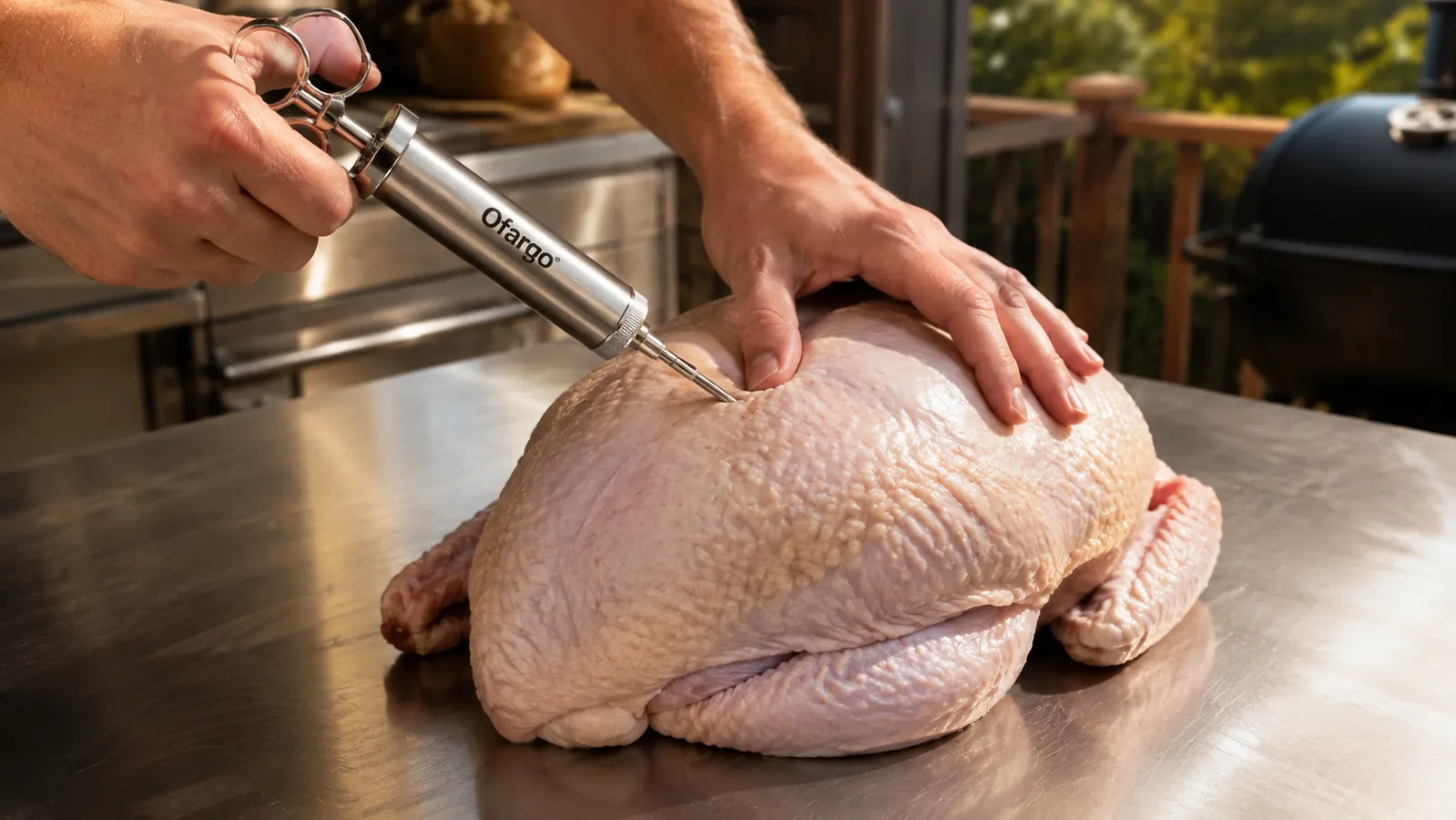
Here is the part that decides dinner. Go for the thickest part of the breast, the meatiest section, and push the needle deep until only a little is still showing. Then pull the needle back slowly as you depress the plunger, so the liquid spreads along the channel instead of pooling in one wet spot. Work in a rough grid, about an inch apart, and you cover the whole breast without turning any one spot to mush.
Stay away from the bone and away from right under the skin at the edge. Injecting against bone just splashes your mix back out the entry hole and makes a mess, and injecting shallow near the skin can leak and streak. Come at the breast from the thick side and angle the needle so the tip rides inside the meat, not out toward the skin. On a sixteen pound bird I put about four to five ounces total into each breast, and that is plenty. Reserve some for each thigh if you want, but the breast is where the payoff lives.
Set a steady pace and do not rush. Between fills, wipe the needle tip with a clean towel so you are not dragging stray broth into the next channel, which just blurs your grid. If a shot leaks out the entry a little, it is no disaster, the puncture seals as the meat settles. The goal is a bird where every square inch of white meat has had a drink, not a bird riddled front to back. When the grid covers both breasts and both thighs, set the syringe aside and pat the bird dry once more with a paper towel.
Step 5: Season the Outside, Rest, and Smoke to 160, Not 165
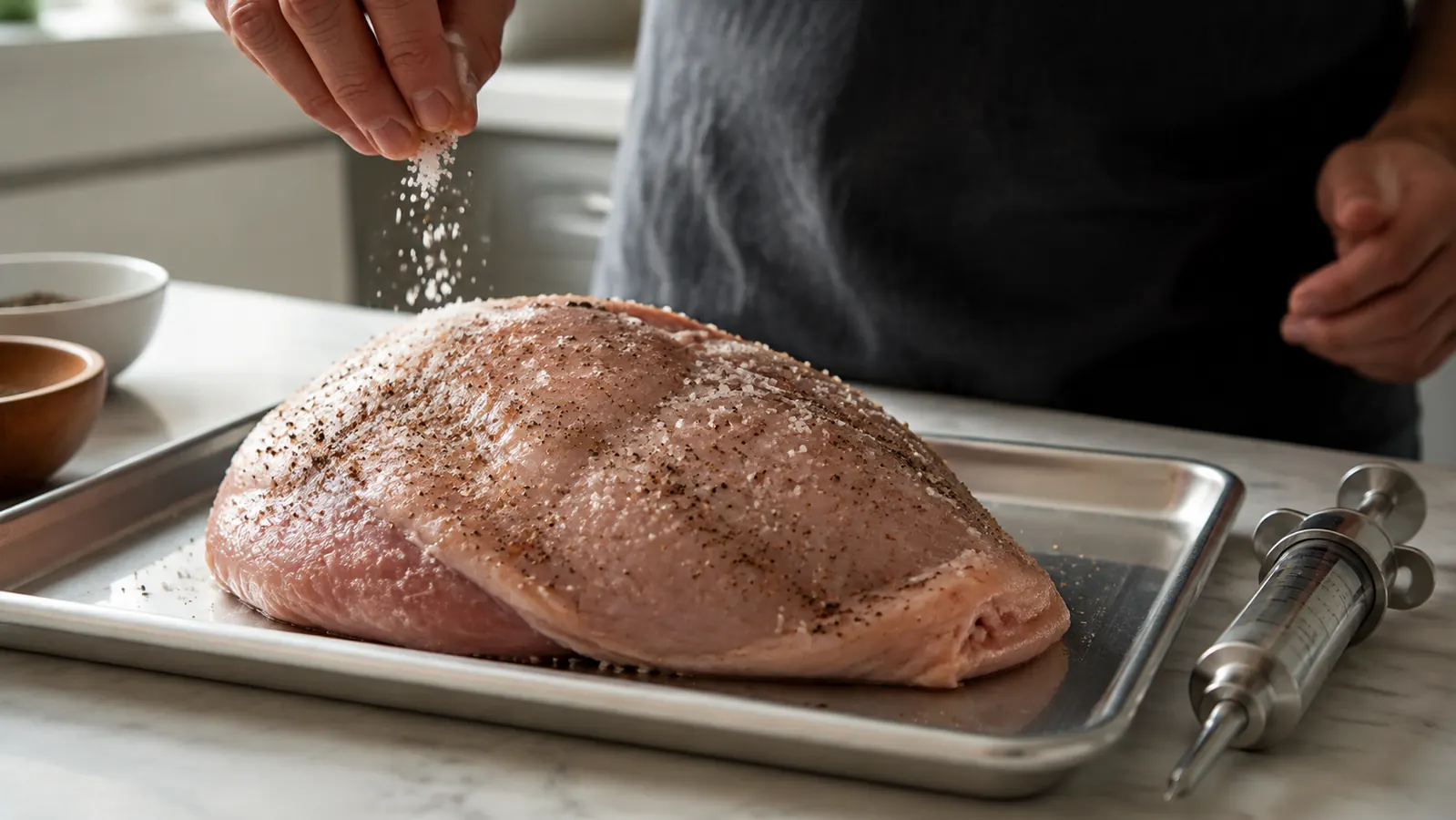
Season the outside after you inject, not before. If the rub goes on first, the liquid you push in can wash it down and leave the skin patchy. Inject first, then hit the bird with your seasoning, getting a little of the mix up under the skin where it carries fat to crisp the top. A touch of rub in the cavity too, and then it goes on the smoker. I run turkey at 275, which keeps the skin from turning to leather while the breast comes up to temp at a reasonable pace.
For a turkey I reach for a mild fruit wood or a light oak, because hard hickory can bury a bird that only smokes for three or four hours. Apple and cherry are my usual pick, sweet and gentle enough that the injection you labored over still reads through. Put a small pan under the bird to catch the drippings, they make a fine base for gravy and keep your smoker tray from a hard cleanup.
Pull the bird when the breast reads 160, and know the carryover will carry it to 165 as it rests under foil for fifteen to twenty minutes before I carve. Chasing 170 in the breast is what turns white meat to sawdust, so trust the probe and pull on time. That rest is where the injection pays off twice, because the liquid you put in has nowhere to go but down, and it keeps the thickest part of the breast moist right through the carve. Injected and rested, that inside-out fix holds.
What Else Helps
A decent thermometer is the partner to this. You can inject the perfect bird and still dry it out by cooking it blind to 180, so run a probe on the breast and trust the number over the clock. The injection handles the moisture, the probe handles the doneness, and together they are the whole game. I have a wireless probe that sits in the meat and talks to my phone, so the only lid I open is the one at the very end. That is the whole point, keep the smoke in and the guesswork out.
Clean the Ofargo as soon as dinner is served, not the morning after. It breaks into parts, so rinse the needle and barrel under warm water, run a bit of hot broth or water through the bore to flush the butter before it sets, and you are done in sixty seconds. A warm rinse now beats chipping cold grease out of a needle later. Give the needles a dry towel pat and tuck them up dry before you put the kit away, and that injector will outlast a decade of turkey seasons. If you want the reasoning behind why an injector beats a dry brine or a butter-under-the-skin rub for a bird, the longer version lives in my meat injector deep dive, and the everyday case for it is in the reasons list, but for a straight cook this is all you need at the pit.
The first bird I injected and smoked, my brother-in-law who swears he hates white meat asked for seconds of the breast, and that was the moment I knew I had finally fixed the dry from the inside instead of paving over it.
Give This Turkey Season an Inside-Out Fix
You have the smoke. An Ofargo stainless injector is the one addition that keeps the breast you worked all day for actually worth eating. Load it warm, purge the air, and pull the bird at 160.
Amazon Check Today's Price on Amazon →